Cart
0
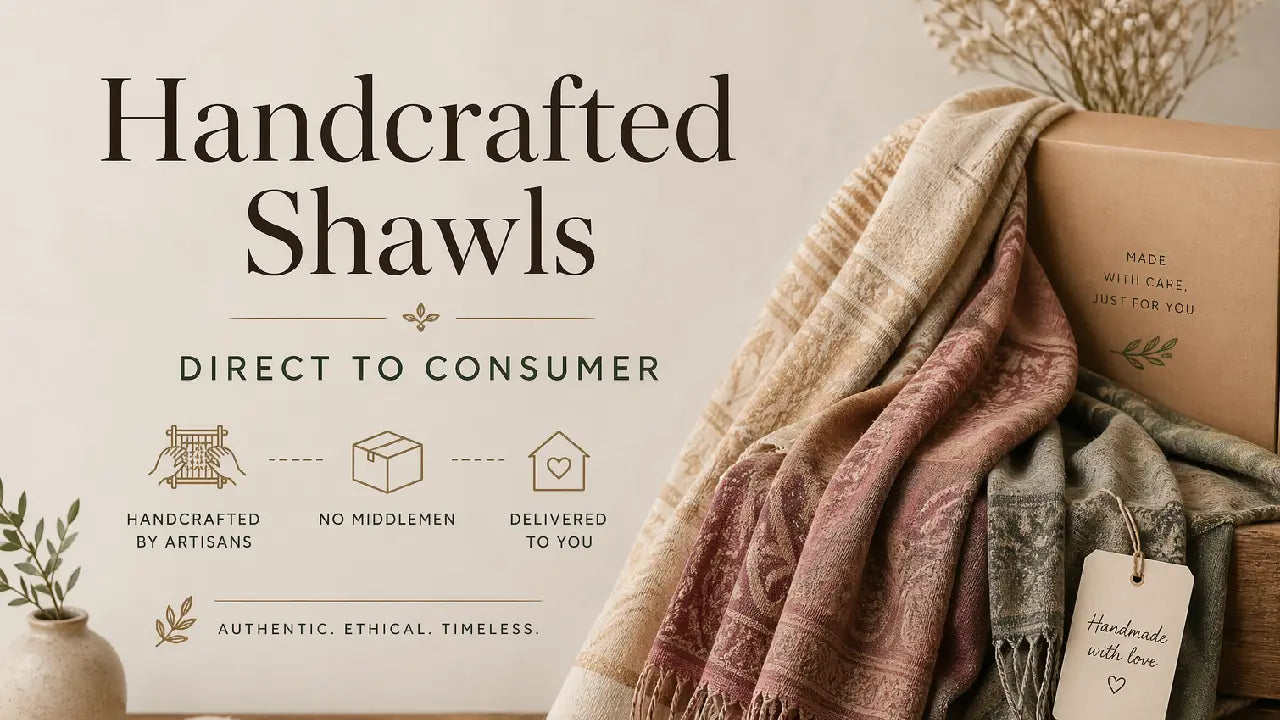
Indian fashion currently experiences a major yet unnoticed accomplishment. Buyers are turning away from mass-produced, factory-made accessories and actively seeking out handcrafted shawls direct to consumer — pieces that come straight from the hands of skilled artisans to their doorstep, with no middlemen, no markups, and no compromise on authenticity.
This article will show you why shawls from heritage craft brands feel different than those from fast fashion stores. The direct to consumer movement in handcrafted textiles is not just a trend. The practice changes how Indian customers perceive product quality and product value and product craftsmanship and responsible buying behavior which includes their ability to buy handcrafted shawls through direct customer access.
The information in this article shows you the importance of the movement and the ways you can support it whether you are buying a single artisan shawl or making your first collection.
What Does Handcrafted Shawls Direct to Consumer Actually Mean?
Let us start with clarity, because this phrase carries real meaning that is worth understanding properly.
A handcrafted shawl is one that has been made primarily through skilled human hands at every stage of production — from the spinning of raw fibre to the weaving on a traditional loom, and in many cases through hand-embroidery, hand-dyeing, or hand-finishing afterwards. It stands in direct contrast to machine-made shawls produced in factories at speed, volume, and the lowest possible cost.
Direct to consumer means exactly what it says. The shawl travels from the artisan or the brand that works directly with artisans, straight to the buyer — without passing through layers of wholesalers, distributors, and retail intermediaries that each add cost and distance between the maker and the person wearing the final piece.
When you put these two things together — handcrafted shawls direct to consumer — you get something genuinely powerful. You get a product of authentic craft quality, at a fair and transparent price, with a traceable story of origin. And in 2026, Indian buyers are seeking exactly this combination in growing numbers.
Types of Handcrafted Shawls Available Direct to Consumer
One of the most exciting things about exploring handcrafted shawls direct to consumer is the extraordinary range of craft traditions you can access. India is home to some of the world's finest shawl-making traditions, each distinct in technique, region, and aesthetic character.
Handcrafted Pashmina Shawls Woven by hand from the ultra-fine undercoat of Changthangi goats in Kashmir and Ladakh, handcrafted pashmina shawls represent the pinnacle of Indian textile heritage. The fibre measures just 12 to 16 microns — finer than the finest human hair — giving these shawls their legendary featherlight warmth and silky softness that is genuinely unlike anything else.
Handcrafted Wool Shawls Handcrafted wool shawls from regions like Kullu in Himachal Pradesh feature bold, traditional geometric patterns woven on pit looms using locally sourced wool. These shawls are robust, richly coloured, and carry a distinctive Himalayan character that makes them instantly recognisable and deeply cherished. The handcrafted wool shawl tradition in India is centuries old and deserves far more recognition than it currently receives.
Sozni Embroidered Shawls These are plain-woven pashmina or wool shawls that are then hand-embroidered using an extraordinarily fine needle technique called sozni. A single Sozni-embroidered handcrafted shawl direct to consumer from a genuine Kashmir artisan can take anywhere from several weeks to several months to complete, depending on the density and complexity of the embroidery.
Kani Woven Shawls Kani shawls are woven entirely on traditional wooden-stick looms where each colour thread is individually managed by the weaver. The patterns — typically intricate paisleys and floral motifs — are built directly into the weave structure itself. These are among the most time-intensive and valuable handcrafted shawls direct to consumer available in India today.
Hand-Block-Printed Shawls Hand-block printing involves carving intricate designs into wooden blocks and pressing them manually onto fabric with natural dyes. Each print is slightly different from the last — a beautiful imperfection that is the very signature of the human hand. Hand-block-printed artisan shawls are particularly popular in Rajasthan and Gujarat.
Kantha Stitch Shawls Originating in Bengal, Kantha shawls feature running-stitch embroidery worked across the entire surface of the fabric to create flowing, narrative patterns. These handmade shawls India represent a uniquely expressive tradition where the embroidery itself tells a story.
Why the Handcrafted Shawls Direct to Consumer Movement Matters
This is not simply a shopping preference. The rise of handcrafted shawls direct to consumer represents a values shift that has real consequences — for buyers, for artisans, for craft communities, and for the future of Indian textile heritage.
Fair Value Reaches the Artisan Directly In traditional supply chains, a handmade shawl India artisan might receive only a small fraction of the final retail price of their own work. The rest is absorbed by layers of middlemen, agents, and retailers. The direct to consumer model changes this fundamentally. When you buy handcrafted shawls direct to consumer from a brand that works ethically with artisans, a far greater proportion of what you pay reaches the person who actually made the piece.
You Receive Authentic Quality Without Retail Inflation Retail markups on luxury textiles can be extraordinary — sometimes three to five times the actual product cost. By buying handcrafted shawls direct to consumer, you access genuine artisan quality at a price that reflects actual craftsmanship and material cost rather than layers of commercial margin.
Craft Traditions Are Preserved and Sustained When demand for authentic artisan shawls grows through direct channels, it creates sustainable livelihoods for weavers and embroiderers whose skills have been passed down through generations. Without consistent demand, these traditions face the very real risk of dying out entirely within a generation. Every purchase of handcrafted shawls direct to consumer is, in a meaningful sense, a vote for preserving India's irreplaceable textile heritage.
You Get a Story With Your Shawl Mass-produced shawls have no story. A handcrafted shawl direct to consumer from a genuine artisan community carries provenance — a specific region, a specific technique, a specific tradition. That story adds a dimension of meaning to the ownership and wearing experience that no factory product can ever replicate.
Conscious Consumption at Its Most Elegant Choosing handcrafted wool shawls and artisan shawls over synthetic, mass-manufactured alternatives is also an environmental choice. Natural fibres, traditional dyes, and human-powered production have a dramatically lower environmental footprint than industrial textile manufacturing.
How to Style Handcrafted Shawls: Looks That Do Justice to the Craft
A handcrafted shawl needs to be worn because it exists for that purpose. Here are fashion techniques which display the artistic work and your individual style:
Heritage Drape Over Ethnic Wear: The Sozni-embroidered and Kani handcrafted shawl should flow freely from both shoulders down to the kurta and saree and anarkali. The actual handcrafted wool shawl and pashmina produce a natural elegant appearance through their weight and draping ability which designers cannot duplicate.
Contrast Wrap Over Contemporary Western Outfits: A boldly patterned hand-block-printed artisan shawl thrown over a plain white shirt and dark trousers creates a striking contrast between the contemporary and the traditional. The most effective method for wearing handcrafted shawls direct to consumer finds in modern everyday styling.
Belted at the Waist as a Statement Layer: Drape a large handmade shawl India piece over your shoulders and cinch it at the waist with a wide leather belt. The gathered fabric produces attractive structured volume which enables the shawl to function as an advanced fashion outer garment.
As a Luxurious Throw or Lap Blanket: A genuine handcrafted wool shawl provides enough warmth and size to function effectively as a home throw during cool evenings and at travel times. The dual-purpose quality of artisan shawls allows customers to experience one of their most beneficial value features.
As a Table or Décor Accent: Many collectors of handcrafted shawls direct to consumer display particularly fine Kani or Sozni pieces as wall hangings or table runners. A shawl of genuine artisanal beauty deserves to be seen even when not being worn.
Your Complete Buying Guide for Handcrafted Shawls Direct to Consumer
The ability to distinguish real handmade shawls which are sold directly to customers stands as a critical ability needed by all educated customers:
The Craft Technique and Region of Origin verification process needs to establish the specific technical elements which define authentic artisan shawl traditions. The Kani shawls display a special back side which creates a copy of the front design. The Sozni embroidery technique displays its neat and precise needlework through its back side view. Kullu wool shawls which artisans create through handcrafting possess a unique border pattern that displays specific geometric elements. The seller needs to show you these elements because you must identify them.
Shawl quality depends on its fibre composition which determines its price for handmade shawls used in India. The pure pashmina and pure merino wool and pashmina-silk blends establish the gold standards for textile materials. The product description must include clear fibre content statements instead of using general terms such as "soft wool" or "pashmina-type" fabrics.
The human hand produces its own imperfections which constitute its authentic artistic expression. Handcrafted shawls which consumers can buy directly from the market show minor discrepancies because they contain exceptional hand-stitched elements and show different printing patterns and display different weaving patterns. These elements function as authenticity markers because they demonstrate human craftsmanship. The elements create individual pieces which possess authentic value through their exclusive features.
Best Sellers who provide artisan shawls and handcrafted shawls direct to consumer must reveal complete information about their product origins and their represented craft traditions and their associated creators. A seller who fails to answer these questions should be viewed as untrustworthy.
The cost of production serves as the primary measure of product value for authentic wool shawls which artisans create through hand work together with pashmina items. The price of a genuine Sozni-embroidered pashmina shawl stands at ₹500 which makes it impossible to consider as authentic. The price of the product ranges from ₹3,000 to over ₹80,000 based on three factors which include the craft technique used and the quality of the fiber and the complexity of the product design.
Why Savita Shawls Is Your Trusted Source for Handcrafted Shawls Direct to Consumer
The direct to consumer model serves as our essential business principle at Savita Shawls because we established it as our core operational principle. Our organization has established lasting relationships with weaver families and artisan communities throughout Kashmir and Himachal Pradesh and Rajasthan and Bengal. The online shopping platform enables customers to buy from us while experiencing the closest possible connection to our makers.
The complete details of our handcrafted shawls which we sell directly to customers show their craft origin and fibre composition and artisan community. Our company does not acquire products from factories that operate without identification or from companies that handle large-scale manufacturing. We acquire our products through direct relationships with skilled artisans who have dedicated their lives to mastering the art of handmade shawl production which their families have practiced for numerous generations in India.
Our collection showcases India's most prestigious shawl traditions through its complete range which includes handcrafted pashmina that offers unmatched softness and Kullu valley handcrafted wool shawls that provide bold warmth and Sozni-embroidered works and Rajasthan artisan shawls that showcase hand-block printing.
Your shopping experience at Savita Shawls goes beyond a simple transaction because it establishes a connection with both the craft and the community and the exquisite textile traditions of India.
How to Care for Your Handcrafted Shawl
Your handcrafted shawl will maintain its attractive appearance based on the care methods you choose to use. Here is the essential guidance:
Professional dry cleaning services should handle Kani and Sozni handcrafted shawls according to their direct-to-consumer business model because this process safeguards the original design and weaving techniques of the fabric.
The plain pashmina and wool fabrics require a gentle hand wash method that uses cool water and a small quantity of mild shampoo. The use of harsh detergent is prohibited. The fabric should be squeezed gently without using wringing or scrubbing or twisting methods.
The handcrafted wool shawl and pashmina should be dried by laying them flat on a clean dry towel which is used for air drying purposes. The fabric structure of a wet shawl will stretch and distort when it is hung to dry.
Artisan shawls should be stored in breathable fabric bags which should be made of cotton muslin and should stay open at all times. Cedar blocks and dried neem leaves should be added to provide natural moth protection without using chemical substances.
Hand-block-printed artisan shawls require special washing procedures because they need to be cleaned inside-out with cool water while avoiding direct sunlight which causes natural dye colors to fade.
The iron should be used on the back side of the fabric through a cool iron setting with a pressing cloth serving as a protection barrier. The use of direct heat on embroidery elements and print surfaces and hand-painted details is prohibited.
Common Mistakes to Avoid When Buying Handcrafted Shawls Direct to Consumer
The term handcrafted appears in online retail which people use incorrectly. Always ask for specifics — which craft technique, which region, which artisan community. The authentic sellers who operate their business by selling handcrafted shawls directly to customers will provide complete answers to these inquiries.
The economics of genuine hand labour mean that truly handcrafted wool shawls and pashmina pieces cannot be produced cheaply. The practice of seeking the cheapest possible price for artisan shawls leads to authenticity loss.
The fibre composition declaration requires verification because it must match actual craft tradition practices. The most common problem that occurs in online shawl retail happens when sellers misrepresent the fibre content of their products.
The greatest privilege which comes from purchasing handcrafted shawls direct to consumer is that it allows customers to discover the human story which exists behind each piece. If a seller cannot share any meaningful information about the artisan or community behind a shawl, question whether the direct to consumer claim is genuine.
The common mistake of buyers happens when they purchase a beautiful handmade shawl India piece and then store it incorrectly in a plastic bag or wardrobe.
Conclusion: Choose Craft, Choose Connection, Choose Handcrafted Shawls Direct to Consumer
The rise of handcrafted shawls direct to consumer is one of the most genuinely meaningful developments in Indian fashion and textile culture in recent years. The practice connects to genuine roots because it delivers authentic goods which people can wear after buying products that display their production history.
The world of handcrafted shawls direct to consumer offers special items which artificial products from factories cannot provide whether you prefer the lightweight comfortable pashmina or the strong traditional Himalayan wool shawl or the detailed artwork of the Sozni-embroidered artisan masterpiece.
At Savita Shawls, we are proud to be part of this movement. Explore our full collection of handcrafted shawls direct to consumer today — and bring home a piece of India's most treasured craft heritage.
Frequently Asked Questions (FAQs)
What does handcrafted shawls direct to consumer mean?
Handcrafted shawls direct to consumer means purchasing shawls that have been made entirely or primarily by skilled artisan hands through traditional weaving embroidery or printing techniques which are sold directly from the maker or an artisan-partnered brand straight to the buyer without retail intermediaries. The system provides authentic product quality together with fair product pricing and complete ability to trace the craft origin of the product.
How are handcrafted wool shawls different from machine-made shawls?
Artisans create handmade wool shawls through traditional loom weaving while they use locally sourced wool and ancient handcraft methods. Human artisans produce each item with unique characteristics that result from their individual crafting process. Industrial production creates machine-made shawls at high speed which result in identical synthetic products. The two products show distinct differences in texture and durability and overall product features which any knowledgeable consumer can recognize.
Which regions of India are known for the best artisan shawls?
India's finest artisan shawl traditions come from several distinct regions. Kashmir is famous for its pashmina wool and Sozni embroidery and Kani weaving techniques. The Kullu valley of Himachal Pradesh serves as the primary location where people create wool shawls with bold patterns through handcrafting. Rajasthan is known for hand-block-printed shawls which use natural dyes for their color. Bengal produces beautiful Kantha stitch handmade shawls. Each region offers a completely distinct aesthetic and craft tradition.
How do I verify that handcrafted shawls direct to consumer are genuinely authentic?
Ask your seller directly about the craft technique, region of origin, and artisan community involved. The product description should show the exact fiber content information which you need to find. Examine high-resolution images for the characteristic imperfections of hand work. The GI tag certification should be verified for all Kashmiri Shawls pieces. Reputable sellers of handcrafted shawls direct to consumer will always provide full and transparent answers to these questions.
What is the price range for genuine handcrafted shawls direct to consumer in India?
The direct-to-consumer market offers authentic handmade shawls which start at ₹3,000 for basic hand-block-printed and plain handcrafted wool shawls and reach prices beyond ₹80,000 for complete hand-embroidered Sozni pashmina and intricate Kani woven shawls. The price directly reflects the fibre quality, the craft complexity, and the time invested by the artisan in producing each individual piece.
Are handmade shawls India suitable for gifting?
Absolutely. Handmade shawls from India serve as the most valuable traditional gifts which exist in Indian fashion. The handcrafted shawl represents a complete story which showcases artistic craftsmanship and provides an enduring value for the recipient. The direct-to-consumer business model of Savita Shawls and other handcrafted shawl sellers enables them to provide premium gift packaging which makes their products look as beautiful as the actual items.
How should I care for artisan shawls at home?
The best way to clean Kani shawls and embroidered shawls is to use professional dry cleaning services. The best method to wash plain pashmina shawls and handmade wool shawls involves using gentle hand washing techniques with cool water and mild shampoo. Always dry flat on a towel — never hung. The moth deterrent system requires storage in breathable cotton muslin bags that contain cedar blocks. All handcrafted shawl types should not be stored in sealed plastic containers or exposed to direct sunlight.
Can boutique owners buy handcrafted shawls direct to consumer in bulk?
Yes. Several quality brands working in the handcrafted shawls direct to consumer space, including Savita Shawls, offer wholesale and bulk purchasing options for boutique owners and retailers. This system enables boutique stores to sell their customers authentic artisan shawls which come with complete provenance records and quality assurance that establishes enduring customer trust.
What makes Kullu handcrafted wool shawls unique?
Kullu handcrafted wool shawls from Himachal Pradesh use traditional pit looms to create their designs, which employ local sheep wool and natural colors. The shawls display strong geometric designs that create special border patterns, which show the unique Kullu weaving style. The shawl showcases its strength through its heavy texture, which creates deep warmth and develops its unique character, which differs from the delicate pashmina traditions of Kashmir.
Why should I choose Savita Shawls for handcrafted shawls direct to consumer?
Savita Shawls works directly with artisan communities across Kashmir, Himachal Pradesh, Rajasthan, and Bengal — sourcing every piece with full transparency about craft origin, fibre composition, and artisan provenance. Our collection of handcrafted shawls direct to consumer spans the full range of India's finest shawl traditions, from handcrafted pashmina and Sozni embroidery to handcrafted wool shawls and hand-block-printed artisan pieces. The direct to consumer model reaches its highest excellence through our authentic quality products, fair pricing, elegant packaging, and genuine buyer to maker connection.