Cart
0
Introduction: Understanding Luxury Shawls vs Regular Shawls
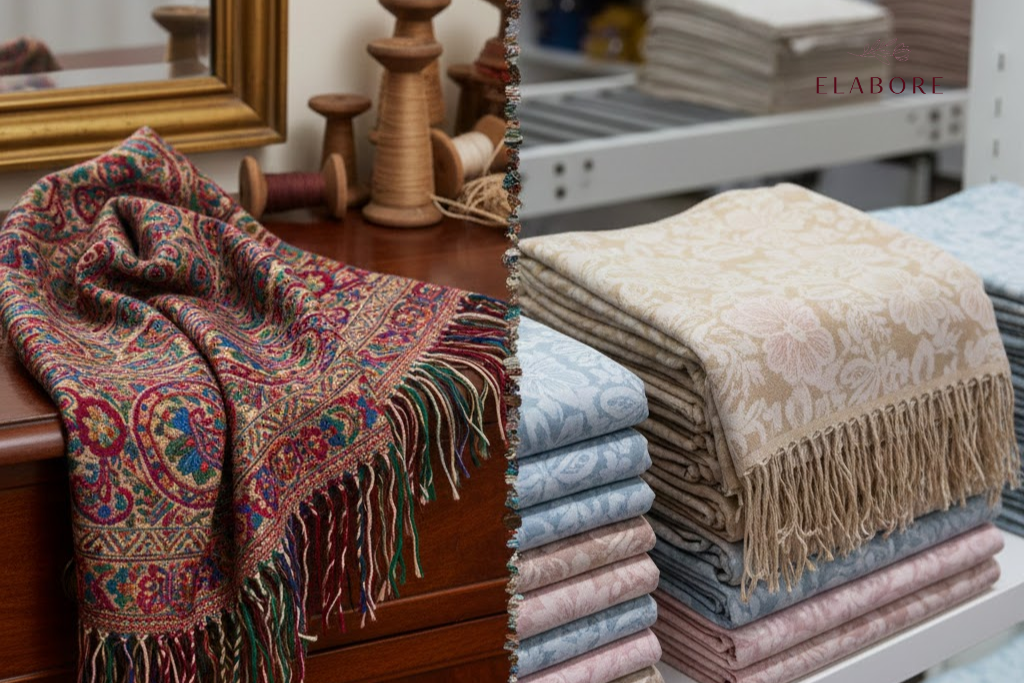
The market provides two separate worlds which customers must navigate to find their ideal shawl because it offers both luxury shawls and standard shawls. The distinction between luxury shawls and standard shawls goes beyond their price difference because it includes differences in craftsmanship and materials and heritage and the total experience of owning a garment which exists beyond typical fashion.
The difference between luxury shawls and standard shawls requires understanding for people who want to buy quality accessories which provide both heat and everlasting fashionable designs. The artistry which crafts premium shawls represents hundreds of years of textile history because every single thread contains the dedication of artisans. The choice between handmade shawls and factory-made shawls shows how people assess value and sustainability and the current relevance of artisanal skills.
The selection of luxury shawls or regular shawls goes beyond choosing an accessory because it represents a commitment to superior products and traditional values and sustainable purchasing practices. Premium shawls carry with them the weight of tradition, the touch of human hands, and the excellence that comes from generations of refined techniques passed down through families of master weavers.
Fashion today follows the industrial age's model through regular shawls which emphasize quick production and high output and standardized designs instead of unique fashion and artistic creativity. The discussion about luxury shawls and regular shawls has developed into a series of ethical discussions because customers today understand how their buying decisions affect product origins and their subsequent environmental effects and cultural heritage preservation practices.
The Craftsmanship Behind Luxury Shawls vs Regular Shawls
The process to produce premium shawls requires workers to execute multiple complex tasks which demand their highest level of skill. The artistic work which artisans produce for high-end shawls becomes obvious when people compare it to standard shawls. Regular shawls which factories produce through automated systems need only hours of production time while artisans need between weeks and years to create luxury shawls because their design complexity and weave patterns determine production time.
Master artisans who create luxury shawls have often spent decades honing their craft, learning intricate techniques that cannot be replicated by machines. The craftspeople dedicate themselves to their work with such intense focus that they achieve a level of concentration that resembles meditation, as they track every thread while keeping the correct tension and verifying that every knot and weave maintains the complete balance of the artwork.
The human element in luxury shawls vs regular shawls is irreplaceable, as each artisan brings their own subtle signature to the work, making every shawl truly one of a kind. The methods used to create handmade shawls have maintained their original form throughout centuries while their techniques have achieved their highest level of development, which enables people today to connect with traditional textile practices.
Every technique needs multiple years for students to become skilled, which applies to the delicate fringe knotting of knots and the complex Pashmina shawl weaving patterns and the detailed Kashmiri embroidery needlework. Premium shawls often incorporate multiple traditional techniques within a single piece, with different artisans specializing in various aspects of the creation process. The process of creating each component starts with the spinning of fibers, which moves through different stages until workers apply their finishing touches to complete the process.
People can see better craftsmanship in luxury shawls which display uniform weave patterns and accurate pattern designs and show how different elements of design work together through expert craftsmanship.
Material Quality: The Foundation of Luxury Shawls vs Regular Shawls
The essential distinction between luxury shawls and regular shawls stands at their material quality. Premium shawls are crafted from the finest natural fibers available, which manufacturers extract from special regions that produce outstanding materials. The cashmere used for luxury shawls comes from the soft undercoat that Himalayan goats produce, whereas the highest quality cashmere originates from goats that inhabit the highest mountain areas because their fleece develops the softest insulation.
Pashmina, the ultimate in luxury shawl materials, is derived from a specific breed of Himalayan goat found in the Changtang region of Ladakh, where only the finest fibers measuring less than fifteen microns in diameter qualify for true Pashmina production. The materials show exceptional softness and warmth, while their natural luster and draping abilities remain unmatched by synthetic materials and products that use inferior materials. The material quality of luxury shawls establishes their identity through this particular attribute that sets them apart from standard shawls.
Regular shawls use synthetic fibers that manufacturers make through mass-production processes and they use natural materials that lack the quality and performance capabilities of premium fibers. The materials perform essential functions because they can create a visual impression of luxury materials, but their tactile properties and long-term performance do not match actual luxury materials.
The aging process of handmade shawls made from premium materials demonstrates a clear difference from production-line shawls because the handmade items develop softness and an appealing patina, while the production-line items show fast degradation through pilling and shape loss. The selection process for premium shawl fibers involves evaluating multiple aspects including fiber length, crimp, and color-holding ability which ensures that the final product retains its visual appeal and practical use throughout many years. The dedication to excellence in materials establishes what separates luxury shawls from regular shawls based on their instant attractiveness and their worth throughout time.
Weaving Techniques: Luxury Shawls vs Regular Shawls
The weaving techniques employed in creating premium shawls represent some of the most sophisticated textile processes known to humanity. When examining luxury shawls vs regular shawls, the weaving complexity stands out as a major differentiator. Traditional handmade shawls often utilize weaving methods that have remained virtually unchanged for centuries, requiring looms that are themselves works of craftsmanship and precision.
The process of setting up a traditional loom for a complex pattern can take days or even weeks before the actual weaving begins, with thousands of individual threads needing to be arranged in precise configurations to allow the intricate patterns to emerge during the weaving process. Premium shawls frequently feature complex designs that require the weaver to maintain multiple color threads simultaneously, following patterns that exist only in memory or on hand-drawn charts, demanding absolute concentration and expertise to execute flawlessly. The density of weave in luxury shawls is typically much higher than in regular alternatives, resulting in a fabric that is simultaneously lightweight and incredibly warm, with a smoothness that comes from thousands of tightly packed threads working in harmony.
Mass-produced shawls, by contrast, rely on mechanical looms that, while capable of producing consistent results at high speed, are limited in the complexity and subtlety of patterns they can create. The weaving process for regular shawls prioritizes efficiency and uniformity, producing identical pieces without the character variations that make handmade shawls unique. When examining luxury shawls vs regular shawls closely, the difference in weave quality becomes immediately apparent in the precision of pattern execution, the crispness of design boundaries, and the overall structural integrity of the fabric.
Premium shawls often incorporate multiple weaving techniques within a single piece, such as combining twill weaves with plain weaves to create textural interest and visual depth that machine production cannot achieve. The selvages of handmade shawls, where the weaving turns back on itself at the edges, demonstrate the skill of the weaver in maintaining consistent tension and creating clean, durable borders that frame the piece beautifully. This weaving excellence further emphasizes the distinction between luxury shawls vs regular shawls.
Embellishment and Decorative Artistry in Luxury Shawls vs Regular Shawls
The embellishment techniques used in premium shawls elevate these accessories from mere functional items to wearable works of art. The difference in luxury shawls vs regular shawls is particularly striking when it comes to decorative elements. Handmade shawls often feature intricate embroidery that can take skilled artisans months or even years to complete, with some of the most elaborate pieces incorporating millions of individual stitches creating designs of breathtaking complexity and beauty.
Traditional embroidery techniques such as the sozni needlework found on Kashmiri shawls involve using a single strand of silk or fine wool thread to create delicate patterns that can cover the entire surface of the shawl or highlight specific areas with exquisite detail. The precision required for this work is extraordinary, as artisans work with needles so fine they are barely visible, creating stitches so small and regular that the embroidered surface appears almost painted rather than stitched. Premium shawls may also incorporate other decorative elements such as hand-tied fringe, carefully constructed borders, and finishing touches that demonstrate the maker's commitment to excellence in every aspect of the piece.
Regular shawls, when they feature any embellishment at all, typically rely on machine embroidery or printed designs that lack the depth, texture, and artistic merit of hand-executed work. The difference when comparing luxury shawls vs regular shawls in terms of embellishment is not merely aesthetic but speaks to fundamental differences in approach and value. Machine embroidery, while capable of creating consistent patterns, produces stitches that are uniform to the point of sterility, lacking the subtle irregularities that give handmade work its character and life.
Premium shawls often feature embroidery that responds to the natural variations in the base fabric, with skilled artisans adapting their work to enhance the inherent beauty of the material rather than simply imposing a predetermined pattern upon it. The thread used in embellishing handmade shawls is typically hand-dyed in small batches, allowing for subtle color variations that add depth and richness to the overall design, whereas mass-produced alternatives use synthetic threads that offer bright but flat color that lacks nuance and sophistication.
Color and Dyeing Processes: Luxury Shawls vs Regular Shawls
The coloration of premium shawls represents another area where the difference between luxury shawls vs regular shawls becomes strikingly apparent. Handmade luxury shawls are typically dyed using traditional methods that have been refined over centuries, often employing natural dyes derived from plants, minerals, and insects that produce colors of remarkable depth, complexity, and longevity.
The dyeing process for luxury shawls is an art form in itself, requiring extensive knowledge of chemistry, fiber properties, and color theory to achieve the desired results. Natural dyes used in premium shawls create colors that are inherently more harmonious and subtle than their synthetic counterparts, with variations within a single dye lot that add character and depth to the finished piece. The process of achieving the perfect color for a handmade shawl may involve multiple dye baths, careful temperature control, and the use of mordants that help fix the color to the fiber while also influencing the final shade and vibrancy of the hue.
Mass-produced shawls rely almost exclusively on synthetic dyes that can be applied quickly, consistently, and cheaply in industrial settings. While synthetic dyes offer advantages in terms of color fastness and availability in a wide range of bright, saturated hues, they lack the subtlety and depth that natural dyes bring to premium shawls. The colors in regular shawls tend to be flat and uniform, lacking the variations and undertones that make naturally dyed handmade shawls so visually interesting and sophisticated.
Furthermore, the dyeing process for luxury shawls often takes into consideration the entire lifecycle of the piece, using dyes and techniques that allow the colors to age gracefully, developing a beautiful patina over time rather than simply fading or becoming dull. When examining luxury shawls vs regular shawls side by side, the difference in color quality is often one of the most immediately noticeable distinctions, with premium pieces displaying a richness and complexity of hue that mass-produced alternatives cannot match, regardless of how vibrant their initial appearance might be.
Durability and Longevity: Luxury Shawls vs Regular Shawls
When considering the practical aspects of luxury shawls vs regular shawls, durability and longevity emerge as critical factors that justify the significant price difference between premium and mass-produced options. Handmade luxury shawls crafted from the finest materials using traditional techniques are designed and constructed to last for generations, often becoming treasured family heirlooms passed down through multiple generations.
The superior fiber quality used in premium shawls means that the material itself is inherently more durable, with longer fibers that resist pilling and breaking, and natural resilience that allows the fabric to recover from folding and wear without permanent damage. The construction techniques employed in luxury shawls, with their tight weaves and secure finishing, create a structural integrity that allows these pieces to withstand regular use while actually becoming softer and more beautiful over time. Many premium shawls improve with age, as the natural oils in high-quality fibers develop a subtle sheen and the fabric relaxes into an even more luxurious drape through years of wear.
Regular shawls, constructed from lower-quality materials using efficient but less robust techniques, typically have a much shorter useful lifespan. The synthetic fibers or lower-grade natural materials commonly used in mass-produced shawls are prone to pilling, where small balls of fiber form on the surface of the fabric, creating an unsightly and rough texture that degrades the appearance of the piece. The looser weaves and less careful construction of regular shawls mean that they are more susceptible to snagging, pulling, and developing holes or weak spots with ordinary use.
When calculating the true cost of luxury shawls vs regular shawls, the longevity factor becomes crucial, as a premium shawl that lasts for decades or even centuries ultimately represents a better value than a mass-produced alternative that may need replacement every few seasons. The investment in handmade shawls is an investment in quality that endures, maintaining both its functional and aesthetic properties far longer than any regular shawl could hope to achieve. This durability distinction is essential when evaluating luxury shawls vs regular shawls.
Environmental and Ethical Considerations: Luxury Shawls vs Regular Shawls
The production methods behind premium shawls typically align with environmentally sustainable and ethically responsible practices that stand in stark contrast to the mass production model of regular shawls. When comparing luxury shawls vs regular shawls from an environmental perspective, the differences are substantial. Handmade shawls are often created using traditional, low-impact methods that have minimal environmental footprint, with artisans working in small workshops or home settings using hand-powered tools and natural materials.
The fibers used in luxury shawls are generally sourced from animals raised in traditional, extensive farming systems where the welfare of the animals is paramount and their natural behaviors are respected. The dyeing processes employed for premium shawls, particularly when using natural dyes, avoid the harsh chemical pollutants associated with industrial textile production, with waste products that are biodegradable and far less harmful to water systems and ecosystems. The slow, careful production of handmade shawls also means reduced energy consumption compared to the massive power requirements of industrial textile manufacturing facilities that produce regular shawls.
The ethical dimensions of luxury shawls vs regular shawls extend beyond environmental concerns to encompass fair labor practices and the preservation of cultural heritage. Artisans creating premium shawls are typically paid fairly for their highly skilled work, with their expertise recognized and valued in ways that support sustainable livelihoods and allow traditional crafts to continue thriving. The production of handmade shawls often supports entire communities where weaving and embroidery skills are passed down through generations, providing economic stability while preserving important cultural traditions.
In contrast, mass-produced regular shawls are frequently manufactured in large factories where workers may face poor conditions, low wages, and little recognition for their labor. The fast fashion model that dominates the production of regular shawls contributes to environmental degradation through excessive water use, chemical pollution, and the creation of textile waste on an enormous scale. Choosing luxury shawls vs regular shawls represents a conscious decision to support sustainable, ethical production methods and to invest in quality pieces that honor both makers and materials.
Design Authenticity and Cultural Heritage: Luxury Shawls vs Regular Shawls
Premium shawls often serve as repositories of cultural heritage, carrying forward design traditions that have evolved over centuries within specific communities and regions. The authenticity factor in luxury shawls vs regular shawls is significant and meaningful. Handmade shawls from Kashmir, for instance, feature motifs and patterns that have deep cultural significance, with designs that have been refined through countless generations of weavers and embroiderers who have added their own creative interpretations while maintaining respect for tradition.
The paisley motif, which appears on many luxury shawls, has a rich history spanning Persian, Indian, and Central Asian cultures, with each variation of the design carrying its own symbolic meanings and aesthetic traditions. Premium shawls represent authentic expressions of these cultural traditions, created by artisans who understand not just the technical execution but also the cultural context and significance of the patterns they create. The authenticity of design in handmade shawls connects wearers to a broader narrative of human creativity and cultural exchange, transforming a simple accessory into a piece with profound historical and artistic significance.
Regular shawls, by contrast, often appropriate these traditional designs without understanding or respecting their cultural origins, reducing complex patterns with deep meaning to mere decorative elements chosen for their visual appeal or commercial marketability. When comparing luxury shawls vs regular shawls, the difference in design authenticity is evident in the thoughtful composition and execution of patterns in premium pieces versus the often haphazard or simplified versions found in mass-produced alternatives.
Mass production typically distorts traditional designs to fit the limitations of machine manufacture, losing the subtle proportions, intricate details, and harmonious relationships between elements that make the original designs so visually compelling. Premium shawls preserve the integrity of these traditional patterns while allowing for creative innovation by skilled artisans who understand the design principles deeply enough to expand upon them thoughtfully. The investment in handmade shawls supports the continuation of these design traditions, ensuring that the knowledge and skills necessary to create authentic pieces are passed to future generations rather than being lost to the homogenizing forces of mass production. This cultural preservation is a key advantage of luxury shawls vs regular shawls.
The Tactile Experience: Luxury Shawls vs Regular Shawls
The sensory experience of wearing luxury shawls versus regular shawls reveals immediately why premium pieces command their high prices and devoted followings. The wearing comfort of luxury shawls vs regular shawls is incomparable. Premium shawls crafted from the finest cashmere or pashmina possess an extraordinary softness that is almost indescribable, often compared to touching a cloud or caressing the most delicate silk.
This exceptional softness comes from the use of the very finest fibers, typically measuring less than fifteen or even twelve microns in diameter, creating a surface texture that feels impossibly smooth against the skin without any hint of scratchiness or irritation. Handmade shawls drape in a way that seems almost liquid, conforming gracefully to the body's contours while maintaining their structure and creating elegant folds that enhance rather than overwhelm the wearer's silhouette. The weight of premium shawls strikes a perfect balance, providing substantial warmth despite being remarkably lightweight, a paradox achieved through the insulating properties of high-quality natural fibers and the tight, efficient weave that traps air effectively while minimizing bulk.
Regular shawls simply cannot match the tactile luxury of their premium counterparts, regardless of how soft they may feel initially. Mass-produced shawls made from synthetic fibers or blended materials may feel reasonably soft when new, but they lack the lasting comfort and temperature-regulating properties of natural fibers used in handmade shawls. Synthetic materials in regular shawls do not breathe effectively, leading to discomfort when worn for extended periods as they trap moisture and heat against the skin.
The draping quality of mass-produced shawls is typically inferior, with fabrics that either hang too stiffly or collapse too limply, failing to create the elegant, sophisticated silhouette that premium shawls achieve effortlessly. When experiencing luxury shawls vs regular shawls directly, the difference in wearing comfort becomes one of the most compelling arguments for investing in premium pieces, as the superior feel and performance of handmade shawls transform them from simple accessories into genuinely pleasurable items that enhance the wearer's comfort and confidence throughout the day.
Investment Value and Heirloom Potential: Luxury Shawls vs Regular Shawls
The financial consideration of luxury shawls vs regular shawls extends far beyond the initial purchase price to encompass long-term value retention and investment potential. Premium luxury shawls, particularly those from renowned regions or created by master artisans, often appreciate in value over time, becoming more valuable as they age and as the traditional skills necessary to create them become increasingly rare.
Handmade shawls of exceptional quality have been known to sell at auction for many times their original purchase price, particularly pieces with provenance or those representing the work of artisans whose skills are recognized as extraordinary. The investment nature of luxury shawls comes not just from their financial value but from their cultural and historical significance, as each premium piece represents a snapshot of traditional craft at a particular moment in time, created using methods that may eventually be lost if not actively preserved and supported through continued patronage.
Regular shawls, being mass-produced and made from materials that deteriorate relatively quickly, hold virtually no investment value and depreciate rapidly from the moment of purchase. The disposable nature of mass-produced fashion means that regular shawls are designed for short-term use rather than long-term ownership, with styles that change seasonally and construction that cannot withstand the test of time.
When considering luxury shawls vs regular shawls as investments, the premium option offers the potential to become a treasured heirloom passed through generations, carrying with it stories, memories, and connections to family history. Handmade shawls have been used for centuries as wedding gifts, milestone presents, and family treasures precisely because their quality and beauty endure, creating tangible links between generations. The initial cost of a premium shawl, when distributed across the decades or even centuries of its useful life and divided among the multiple family members who may eventually own and cherish it, becomes a remarkably reasonable investment in lasting quality and beauty. This heirloom potential is a defining characteristic of luxury shawls vs regular shawls.
Customization and Personalization: Luxury Shawls vs Regular Shawls
The realm of customization represents another significant distinction when comparing luxury shawls vs regular shawls, as premium pieces offer opportunities for personalization that mass production simply cannot accommodate. Handmade luxury shawls can be commissioned to specific requirements, with clients able to work directly with artisans to select colors, patterns, sizes, and decorative elements that reflect their personal preferences and needs.
This collaborative process allows for the creation of truly unique pieces that express individual style while incorporating the artisan's expertise and creative vision. Premium shawls can be customized to commemorate special occasions, incorporate meaningful symbols or motifs, or interpret traditional designs in colors and combinations that hold personal significance for the wearer. The flexibility inherent in traditional handcraft methods means that skilled artisans can adapt their techniques to realize almost any design concept, limited only by the physical properties of the materials and the time available for the project.
Mass-produced regular shawls offer virtually no opportunity for meaningful customization, as their production methods are designed for efficiency through standardization and uniformity. While some manufacturers may offer limited options such as monogramming or selecting from a small range of predetermined color combinations, these superficial personalizations cannot compare to the deep customization possible with handmade shawls.
The difference in customization options when examining luxury shawls vs regular shawls reflects broader philosophies about the role of fashion and personal expression, with premium pieces supporting individuality and personal connection to craftsmanship while mass production encourages conformity and trend-following. Commissioning a custom premium shawl creates a relationship between maker and owner that adds intangible value to the finished piece, as the shawl carries not just the artisan's skill but also the story of its creation and the intention behind its design. This personal connection transforms the shawl from a simple accessory into a meaningful object with emotional resonance that far exceeds its material value. The customization advantage clearly favors luxury shawls vs regular shawls.
Recognition and Status Symbolism: Luxury Shawls vs Regular Shawls
Throughout history, premium shawls have served as markers of taste, refinement, and social status, a tradition that continues in contemporary fashion despite the democratization of style. The prestige factor of luxury shawls vs regular shawls remains significant in discerning circles. Luxury shawls carry an understated elegance that is recognizable to those with knowledge of fine textiles, serving as subtle signals of sophistication and appreciation for quality craftsmanship.
The cachet associated with handmade shawls from renowned regions or created by celebrated artisans adds a dimension of cultural capital that regular shawls cannot provide, regardless of their appearance or price point. Connoisseurs can identify premium shawls at a glance through their distinctive drape, the complexity of their patterns, and the quality of their finishing, creating an immediate connection between wearers who share an appreciation for exceptional textile artistry. The status symbolism of luxury shawls is particularly significant in cultures where textile traditions have deep historical roots, with specific types of premium shawls carrying associations with particular social occasions, ceremonies, or life stages.
Regular shawls, despite sometimes incorporating branding or designer labels, lack the authentic prestige that comes with handmade shawls created using traditional methods and premium materials. The difference in status symbolism when considering luxury shawls vs regular shawls is not about ostentation or obvious display but rather about subtle markers of quality that demonstrate the wearer's discernment and values.
Premium shawls signal an understanding that true luxury lies in quality, craftsmanship, and enduring beauty rather than in trendy logos or seasonal fashion statements. The knowledge required to appreciate the distinctions between luxury and regular shawls itself becomes a form of cultural literacy, with handmade shawls serving as conversation pieces that connect people who share interests in textile arts, cultural heritage, and artisanal craftsmanship. This social dimension of premium shawls adds value beyond the physical object, creating opportunities for meaningful interactions and the sharing of knowledge about craft traditions and the stories behind exceptional pieces. The status and recognition aspects clearly differentiate luxury shawls vs regular shawls.
Care and Maintenance Requirements: Luxury Shawls vs Regular Shawls
The care requirements for luxury shawls vs regular shawls differ significantly, reflecting the different materials and construction methods used in their creation. Premium luxury shawls require gentle, thoughtful care that respects the natural fibers and hand-executed construction, with specific cleaning and storage methods necessary to preserve their beauty and functionality for generations.
Handmade shawls should typically be cleaned using gentle hand-washing techniques with mild, pH-neutral soaps specifically formulated for delicate natural fibers, or through professional cleaning by specialists who understand the particular needs of luxury textiles. The washing process for premium shawls requires careful attention to water temperature, gentle handling to avoid stretching or distorting the fabric, and proper drying methods that allow the piece to retain its shape while air-drying away from direct heat or sunlight. Storage of luxury shawls demands equal care, with proper folding techniques or rolling methods that prevent creasing, and storage in breathable cotton or linen bags that protect against dust and pests while allowing air circulation to prevent mustiness or mildew.
Regular shawls, constructed from synthetic or blended materials designed for durability and easy care, typically tolerate machine washing and rougher handling without significant damage. While this ease of care offers obvious practical advantages for everyday wear, it reflects the fundamentally different nature of mass-produced items designed for convenience rather than longevity.
The care requirements of handmade shawls, though more demanding, become part of the ritual of ownership that deepens the connection between wearer and object, transforming maintenance from a chore into an act of stewardship and appreciation. Premium shawls benefit from periodic professional inspection and conservation to address minor issues before they become serious problems, with specialists able to repair small areas of damage using techniques that match the original construction methods. The investment of time and resources in properly caring for luxury shawls ensures that these pieces fulfill their potential as multi-generational treasures, with proper maintenance allowing them to survive and even improve with age, developing the soft patina and graceful drape that only comes with years of careful use and preservation. These care considerations are an important aspect of luxury shawls vs regular shawls.
Price Justification and Value Assessment: Luxury Shawls vs Regular Shawls
Understanding the price differential between luxury shawls vs regular shawls requires examining the comprehensive picture of value that extends far beyond the initial transaction. Premium luxury shawls command high prices that reflect the extraordinary investment of time, skill, and premium materials that go into their creation, with some handmade shawls requiring thousands of hours of expert labor before completion.
The price of a luxury shawl compensates not just the individual artisan but supports the entire ecosystem of traditional craft, including the herders who raise and tend the animals that produce the finest fibers, the spinners who transform raw fleece into workable thread, the dyers who create the beautiful colors, and the weavers and embroiderers whose skills bring everything together in the finished piece. When the cost of a premium shawl is considered in relation to the hours of skilled labor involved, the prices often represent remarkably modest compensation for highly specialized expertise that has taken decades to develop.
Regular shawls, priced for mass-market consumption, reflect the economies of scale achieved through industrial production methods but fail to account for hidden costs in terms of environmental impact, labor conditions, and the loss of cultural heritage. The apparent value of cheap, mass-produced shawls becomes less clear when considering their short useful lifespan and the need for frequent replacement, with the cumulative cost over time potentially exceeding the price of a single premium shawl that would last for generations.
The value proposition of luxury shawls vs regular shawls shifts dramatically when considering intangible factors such as the pleasure of owning and wearing exceptional quality items, the satisfaction of supporting traditional crafts and fair labor practices, and the potential for pieces to become treasured family heirlooms with both monetary and sentimental value. Premium shawls represent true value in the deepest sense, offering a combination of beauty, functionality, cultural significance, and lasting quality that justifies their prices to those who understand and appreciate the full scope of what they are acquiring.
The decision to invest in luxury shawls vs regular shawls becomes not just a fashion choice but a statement of values, prioritizing quality, sustainability, and cultural preservation over the disposable convenience of mass-produced alternatives. Understanding the price and value equation is essential when evaluating luxury shawls vs regular shawls.
Conclusion: Making an Informed Choice Between Luxury Shawls vs Regular Shawls
The comprehensive comparison between luxury shawls vs regular shawls reveals fundamental differences that extend across every aspect of these garments, from the sourcing of materials to the final wearing experience. Premium luxury shawls represent the pinnacle of textile artistry, combining the finest natural fibers with traditional techniques refined over centuries and the irreplaceable human element of skilled craftsmanship.
Handmade luxury shawls offer a wearing experience characterized by exceptional softness, perfect drape, and lasting comfort that mass-produced alternatives cannot match, regardless of advances in synthetic materials or production efficiency. The investment in luxury shawls supports sustainable, ethical production methods while preserving cultural heritage and ensuring that traditional craft skills continue to thrive for future generations.
The choice between luxury shawls vs regular shawls ultimately reflects personal priorities and values, with premium pieces appealing to those who appreciate quality, craftsmanship, and the intangible pleasures of owning objects of genuine beauty and significance that transcend their practical function to become cherished possessions that enrich daily life and create lasting connections across generations. When making the decision between luxury shawls vs regular shawls, consumers should consider not only the immediate purchase price but the long-term value, environmental impact, ethical production methods, and the profound satisfaction that comes from owning truly exceptional textile artistry.
Whether you choose luxury shawls vs regular shawls, understanding these differences empowers you to make an informed decision that aligns with your values, budget, and appreciation for quality craftsmanship.