Cart
0
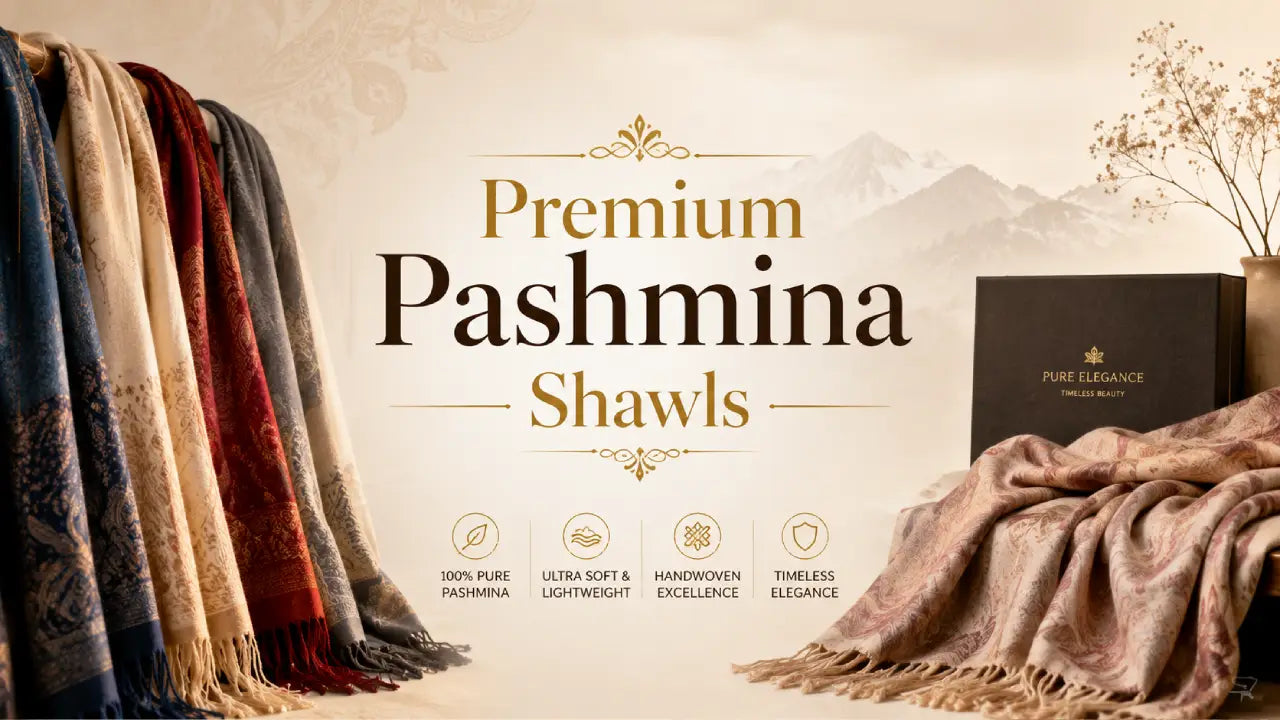
Few textiles carry the weight of history and craftsmanship quite like Pashmina. Yet in a market flooded with imitations, finding genuinely premium Pashmina shawls has become a challenge even for seasoned fashion lovers. What's sold as "Pashmina" online is often a blend of synthetic fibres with none of the warmth, softness, or heritage of the original.
This guide exists to close that gap. We'll show you exactly how to distinguish authentic pashmina shawls from convincing imitations — from the way the fibre feels in your hand to the details woven into every fringe. You'll learn what separates true pashmina wool shawls from acrylic look-alikes, how cashmere pashmina differs from ordinary wool, and why a genuine luxury pashmina wrap is worth every rupee of its price.
Whether this is your first Pashmina purchase or your tenth, understanding authenticity transforms how you shop — and how confidently you wear what you buy.
What Makes Pashmina the Pinnacle of Luxury Textiles?
Before learning to spot authenticity, it helps to understand what makes premium Pashmina shawls so exceptional in the first place.
The Rare Origin of Pashmina Fibre
Genuine Pashmina comes from the undercoat of the Changthangi goat, a breed that survives brutal Himalayan winters at altitudes above 4,000 metres. Each goat yields only a small quantity of usable fibre per year, which is part of why authentic Pashmina remains rare and valuable.
Why It Feels Different From Regular Wool
Pashmina fibres are astonishingly fine — measured in microns, not millimetres — which is what gives real pashmina wool shawls their feather-light warmth. This fineness simply cannot be replicated by synthetic fibres or standard sheep's wool.
A Legacy Woven Into Every Thread
Kashmiri artisans have hand-spun and hand-woven Pashmina for centuries, a craft so specialised that a single shawl can take weeks to complete. This is why true luxury pashmina wraps are considered heirlooms, not seasonal purchases.
Premium Pashmina Shawls vs. Ordinary Cashmere: Know the Difference
Many shoppers assume Pashmina and cashmere are interchangeable — they're not.
-
Cashmere is a broader category, sourced from various goat breeds worldwide, with fibre diameters typically ranging higher.
-
Pashmina is a specific, finer form of cashmere, sourced exclusively from Changthangi goats in the Ladakh and Kashmir regions.
-
All Pashmina is cashmere, but not all cashmere is Pashmina.
This distinction matters because many products marketed as cashmere pashmina are actually blended or lower-grade cashmere with none of the fineness or heritage of true Kashmiri Pashmina.
According to the Craft Development Institute, the official GI-registration body for Kashmir Pashmina, authentic Kashmir Pashmina must be made from 100% Pashm fibre with a fineness of up to 16 microns, hand-spun, and hand-woven by artisans of Jammu & Kashmir — a benchmark few mass-market products actually meet.
How to Identify Authentic Pashmina Shawls: A Step-by-Step Guide
If you're serious about buying authentic pashmina shawls, these checks will help you separate genuine craftsmanship from clever imitation.
1. The Touch Test
Real Pashmina feels warm, soft, and slightly textured — never plasticky or overly smooth. Synthetic blends often feel artificially silky or stiff to the touch.
2. The Weave Inspection
Hold the shawl up to light. Authentic hand-woven Pashmina shows subtle, natural irregularities in the weave. Machine-made imitations appear perfectly uniform and flat.
3. The Fringe Detail
Genuine Pashmina fringes are created by extending the loom's warp threads and finishing them by hand. Machine-made shawls often have fringes that are sewn or glued on separately — a telltale sign of a lower-quality piece.
4. The Weight and Drape
Despite their incredible warmth, real premium Pashmina shawls are remarkably lightweight. If a shawl feels heavy or bulky, it likely contains synthetic filler fibres.
5. Ask for Fibre and Sourcing Transparency
A trustworthy seller will clearly state the fibre composition and sourcing — not vague terms like "premium fabric." At Elabore Luxury's Pashmina Shawls collection, every piece is described with complete fabric transparency.
6. Check for GI Certification Where Possible
Look for GI-tagged products or brands that reference authenticity standards set by recognised Kashmiri craft institutions — a sign the seller takes sourcing seriously.
Common Myths About Pashmina Wool Shawls
Misinformation makes authenticity even harder to judge. Let's clear up a few common myths.
Myth 1: "Pilling Means It's Fake"
Contrary to popular belief, genuine wool fibres can pill slightly with wear — this is natural. What should concern you is excessive, plastic-like pilling, which usually signals synthetic material.
Myth 2: "All Soft Shawls Are Pashmina"
Softness alone isn't proof. Many acrylic blends are engineered to feel soft initially but lack the breathability, warmth retention, and longevity of real pashmina wool shawls.
Myth 3: "Cheap Pashmina Is Just a Good Deal"
Given the rarity of authentic fibre and the labour-intensive weaving process, genuine Pashmina simply cannot be sold at rock-bottom prices. If the price feels too good to be true, it usually is.
Styling Premium Pashmina Shawls for Every Occasion
Once you've found a genuine piece, styling it well makes all the difference.
-
Bridal and festive wear — drape richly embroidered Pashmina over lehengas or sarees for a regal finish
-
Formal events — pair a solid-toned luxury pashmina wrap over a gown or tailored outfit
-
Everyday elegance — lightweight Pashmina stoles work beautifully over simple kurtas or western wear
-
Gifting — a well-packaged Pashmina shawl makes a thoughtful, long-lasting gift for weddings or festive occasions
For bridal shoppers specifically, Elabore's wedding shawl collection features Pashmina pieces designed around trousseau elegance, while the embroidered shawls collection offers intricately hand-worked designs for festive dressing.
Caring for Your Premium Pashmina Shawl
Authentic Pashmina rewards proper care with decades of wear.
-
Dry clean only, especially for embroidered or heavily embellished pieces
-
Store folded in breathable fabric, never hung, to avoid stretching
-
Keep away from direct sunlight to preserve natural colour vibrancy
-
Avoid contact with perfume or deodorant, which can weaken delicate fibres over time
-
Air out occasionally rather than washing frequently
The Woolmark Company, a global authority on wool fibres, notes that natural wool retains its shape, breathability, and insulating properties far longer than synthetic alternatives when cared for correctly — one more reason genuine fibre is worth the investment.
Where to Buy Genuine Premium Pashmina Shawls Online
Given how widespread imitation products are, buying from a transparent, established source matters more than ever.
What to Look for in a Trusted Seller
-
Clear, specific fabric descriptions (not vague marketing language)
-
Documented sourcing from Kashmir or Ladakh artisans
-
Consistent quality control and inspection before dispatch
-
Transparent return and authenticity policies
-
A track record of craftsmanship, not just marketing
At Elabore Luxury, every shawl undergoes meticulous inspection before it reaches you — a philosophy rooted in a design process planned a full year in advance to balance authenticity with contemporary style. You can explore this approach further on our About Us page, or browse the complete Kashmiri shawl collection for handcrafted heritage pieces.
Conclusion: Invest in Genuine Premium Pashmina Shawls
Choosing premium Pashmina shawls isn't just a fashion decision — it's an investment in craftsmanship, heritage, and quality that lasts generations. When you know what to look for — the fibre, the weave, the fringe, the feel — you shop with the confidence of a true connoisseur, not a guesswork buyer.
At Elabore Luxury, authenticity isn't a marketing claim; it's the foundation of everything we create. From authentic pashmina shawls to richly detailed luxury pashmina wraps, every piece in our collection is crafted to meet the standard true Pashmina deserves.
Frequently Asked Questions
How can I tell if a Pashmina shawl is real or fake?
Check the touch, weave, and fringe detail — genuine premium Pashmina shawls feel warm and slightly textured, show natural weave irregularities, and have hand-finished fringes rather than machine-sewn ones.
What is the difference between Pashmina and cashmere?
Pashmina is a finer, rarer subtype of cashmere sourced exclusively from Changthangi goats in Ladakh and Kashmir, while regular cashmere pashmina blends may use coarser fibres from other goat breeds worldwide.
Why are authentic Pashmina shawls so expensive?
The rarity of the raw fibre, labour-intensive hand-spinning, and weeks of hand-weaving required to produce genuine pashmina wool shawls all contribute to their premium pricing.
Does real Pashmina pill with use?
Yes, mild pilling is a natural characteristic of genuine wool fibres. Excessive or plastic-like pilling, however, usually indicates a synthetic blend rather than authentic Pashmina.
Can Pashmina shawls be worn in warm weather?
Lightweight Pashmina stoles can be worn in cooler evenings across seasons, though heavier luxury pashmina wraps are best suited to colder months for maximum warmth.
How do I clean a Pashmina shawl without damaging it?
Always dry clean genuine Pashmina, store it folded away from sunlight, and avoid direct contact with perfumes or sprays that can weaken the delicate fibres.
What should I check before buying premium Pashmina shawls online?
Look for detailed fabric transparency, documented sourcing, hand-woven craftsmanship, and a seller with a strong reputation for authenticity — vague descriptions are a red flag.
Is GI certification necessary to prove Pashmina authenticity?
While not every genuine piece carries a formal GI tag, certification from recognised Kashmiri craft institutions is one of the strongest indicators of authentic authentic pashmina shawls.
Are embroidered Pashmina shawls suitable for weddings?
Absolutely, Hand-embroidered Pashmina shawls, especially those with Zari or Sozni work, are a popular choice for bridal trousseaus and festive wear.
How long does a genuine Pashmina shawl last with proper care?
With correct storage and dry cleaning, authentic premium Pashmina shawls can last for decades, often becoming heirloom pieces passed down through generations.