Cart
0
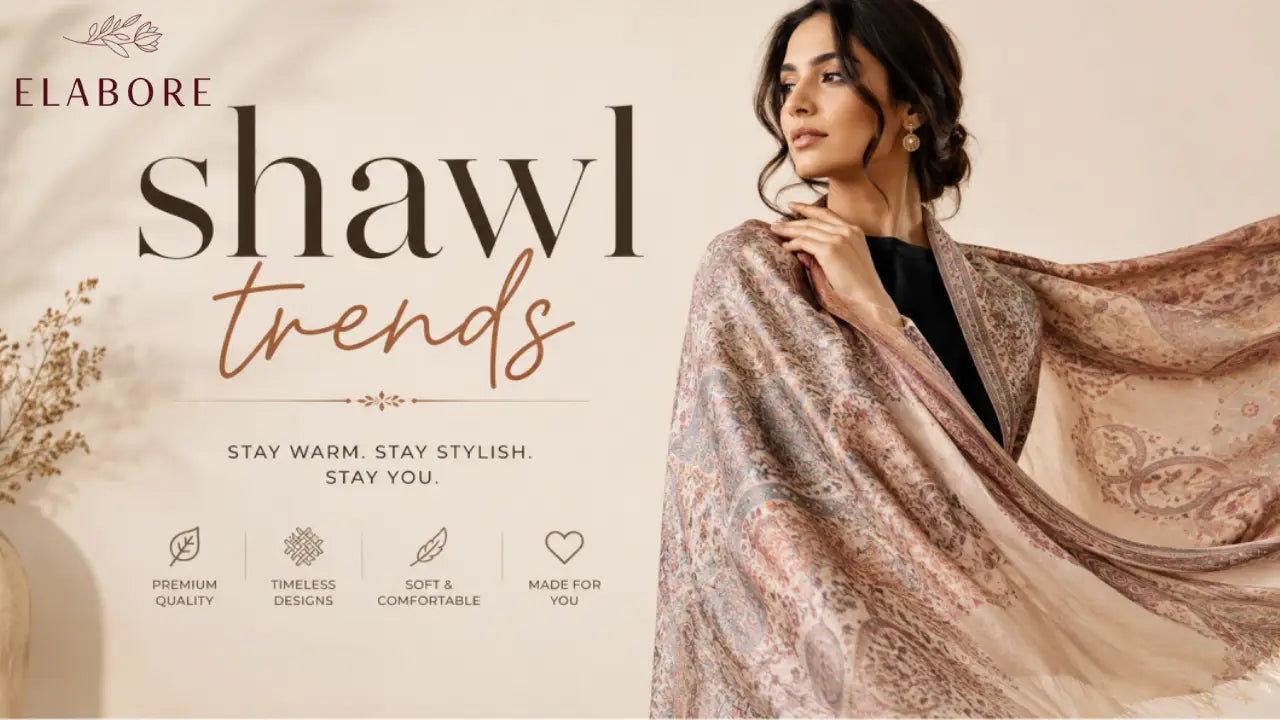
The shawl has never been more relevant. Once considered a purely functional winter accessory, today's shawl has reclaimed its place as one of the most coveted statements in global fashion — from the couture runways of Paris to the retail floors of Tokyo, New York, and Dubai.
Shawl trends in 2025–26 are being shaped by a powerful convergence of forces: the global luxury consumer's hunger for authentic craftsmanship, the rise of conscious fashion, and a deepening appreciation for heritage textiles. Buyers, retailers, and fashion brands worldwide are recalibrating their sourcing strategies to reflect these shifts.
For B2B buyers and fashion brands, understanding where shawl trends are heading is not a matter of aesthetic preference — it is a commercial imperative. The right shawl at the right moment can define an entire season's collection.
At Elabore Luxury, we sit at the intersection of Kashmir's centuries-old weaving traditions and the pulse of contemporary global fashion. This guide breaks down the most important fashion trends in shawls right now — and what they mean for your brand's sourcing strategy.
Why Shawls Are Having a Major Global Fashion Moment
From Functional to Iconic
The modern shawl has transcended its traditional role. Today, fashion trends in shawls reflect broader cultural movements — a desire for slower, more intentional dressing, an embrace of global craftsmanship, and a rejection of disposable fast fashion.
Global luxury report data from institutions like the Business of Fashion consistently shows that heritage textiles and artisanal accessories are among the fastest-growing categories in premium fashion retail. Shawls — particularly those crafted from trending fabrics like Pashmina, Kani weave, and hand-embroidered wool — sit squarely at the heart of this movement.
For B2B buyers, this means one thing: shawls are no longer a seasonal add-on. They are a year-round category with serious commercial weight.
Top Shawl Trends Shaping Global Fashion Markets in 2025–26
1. The Rise of Heritage Weaves as Luxury Status Symbols
Across global fashion markets, heritage weaving techniques are being celebrated like never before. Buyers from Europe, the Middle East, and Southeast Asia are actively seeking textiles with a verifiable cultural origin story — and nothing delivers this more powerfully than Kashmir's ancient craft traditions.
Kani weaving — a painstaking loom-based technique where colourful tapestry patterns are created using small wooden spools rather than shuttles — is one of the hottest shawl trends in the luxury B2B market right now. Each piece can take weeks or months to complete, making it genuinely rare.
Explore Elabore Luxury's stunning Kani Shawl Collection for Women — a range that brings this ancient art form to contemporary fashion buyers seeking authenticity at scale.
Key trend drivers:
-
Growing demand for provenance-backed luxury goods
-
Social media storytelling around artisan craft
-
Luxury consumers rejecting mass production in favour of meaning
-
Retailer appetite for exclusive, limited-availability textiles
2. Embroidery as the New Power Statement
Hand embroidery is dominating winter accessories trends globally. In the 2025–26 cycle, embroidered shawls are not subtle background pieces — they are the focal point of the look.
Global fashion insights from key markets show that heavily embroidered shawls in silk and Pashmina blends are performing exceptionally well in the Middle East, Europe, and across premium Indian retail. Intricate floral embroidery, paisley motifs, and gold Zari threadwork are particularly strong.
This trend aligns with a broader move in global fashion toward maximalism — bold, expressive dressing that makes a statement without words.
Elabore Luxury's Embroidered Shawl Collection showcases the full spectrum of Kashmir's embroidery mastery — from delicate needle-point Sozni work to lavishly embellished bridal pieces.
3. Zari and Metallic Textiles — The Festive Luxury Surge
Trending fabrics for 2025–26 place Zari — traditional gold and silver threadwork woven into fine textiles — firmly in the spotlight. Zari shawls and stoles are surging in demand across the wedding, festive, and gifting categories globally.
This shawl trend is particularly strong in:
-
South Asian markets — driven by wedding season and festive dressing
-
Middle Eastern markets — where gold embellishment has deep cultural resonance
-
Western luxury markets — where Zari pieces are being styled as evening wrap statements
B2B buyers sourcing Zari textiles need suppliers with genuine craft expertise, not machine-imitated alternatives. Elabore Luxury's Zari Shawl Collection is woven using traditional techniques that produce a lustre and depth that mass-produced alternatives simply cannot replicate.
4. Pashmina — The Timeless Fabric That Never Loses Its Edge
If there is one trending fabric that consistently anchors every season's shawl trends, it is genuine Pashmina. In 2025–26, Pashmina is experiencing a remarkable renaissance — driven by luxury consumers who have grown tired of synthetic alternatives and crave the real thing.
Global fashion insights confirm that Pashmina is being positioned in the same tier as cashmere and vicuña in Western luxury markets. Its extraordinary softness, featherlight warmth, and natural breathability make it the benchmark of premium shawl sourcing.
For B2B brands, authentic Pashmina from Kashmir represents a significant competitive differentiator — provided it is sourced from trusted, heritage-rooted suppliers.
Discover Elabore Luxury's collection of Original Pashmina Shawls — each crafted from genuine Changthangi Pashmina fibre and finished to the exacting standards of the world's most discerning buyers.
5. Kalamkari and Hand-Painted Textiles — Wearable Art in Motion
One of the most exciting fashion trends in shawls right now is the emergence of hand-painted and block-printed textiles as a mainstream luxury category. Kalamkari — a centuries-old Indian art form in which natural dyes are applied by hand using a pen-like instrument — is rapidly crossing over from niche craft to global runway.
Fashion editors, stylists, and luxury buyers in Europe and the US are increasingly featuring Kalamkari textiles as statement pieces — recognising them as genuinely one-of-a-kind wearable art.
For fashion brands building collections around storytelling and uniqueness, sourcing Kalamkari shawls from authentic Indian producers is a powerful strategic move.
Explore Elabore Luxury's Kalamkari Shawl Collection — a curated range that brings this extraordinary folk art into contemporary luxury fashion with grace and intention.
6. Gender-Fluid and Unisex Shawl Styling
Global fashion insights from major fashion weeks confirm that gender-fluid dressing is not a trend — it is a permanent structural shift in how luxury fashion operates. Shawls and stoles are among the most naturally gender-fluid accessories in any wardrobe.
Shawl trends in the men's category are accelerating sharply. Male consumers — particularly in South Asia, the Middle East, and among Western luxury buyers — are embracing premium Pashmina stoles, wool mufflers, and Kani shawls as core wardrobe investments.
For B2B buyers, building a gender-inclusive shawl offering is no longer optional. It is a market expectation.
Elabore Luxury's Men's Shawl and Stole Collection offers a comprehensive range of premium menswear-grade Pashmina, Kani, and Zari stoles designed for today's fashion-forward male consumer.
7. Sustainable and Slow Fashion — The Sourcing Mandate
Across every major global fashion market, sustainability is reshaping sourcing decisions at every level of the supply chain. Winter accessories trends in 2025–26 are being filtered through a sustainability lens — with buyers actively seeking textiles that are natural-fibre-based, ethically produced, and built to last.
Kashmiri textiles check every box:
-
Natural fibres — Pashmina, wool, and silk are inherently biodegradable
-
Artisan production — slow, skilled, low-waste manufacturing
-
Longevity — high-quality shawls are heirloom pieces, not disposable fashion
-
Cultural preservation — sourcing from Kashmir supports living craft traditions
According to Vogue Business, heritage craft and sustainable luxury are converging into one of the most powerful forces reshaping the global fashion industry. B2B buyers who align their sourcing with this movement are positioning their brands on the right side of history — and consumer sentiment.
B2B Sourcing Strategy: How to Capitalise on Current Shawl Trends
Build Your Collection Around a Signature Textile Story
The most successful fashion brands do not just follow shawl trends — they own a corner of the trend through a signature textile narrative. Whether your story is built around Kani weaving, Pashmina provenance, or hand-embroidered exclusivity, a clear sourcing identity differentiates your brand in a crowded market.
Diversify Across Occasions and Seasons
Shawl trends are not monolithic. Your B2B sourcing strategy should span:
-
Bridal and wedding — Zari, embroidered Pashmina, heavily embellished pieces
-
Corporate gifting — refined Pashmina stoles, premium wool wraps
-
Everyday luxury — lightweight Pashmina, Kalamkari, printed stoles
-
Festive and occasion wear — Kani, Zari, and crystal-embellished shawls
Elabore Luxury's Best Sellers Collection offers a curated starting point for B2B buyers looking to identify which shawl trends are converting best across retail contexts.
Partner with Heritage Suppliers Who Can Scale
Following fashion trends in shawls is only valuable if your supply chain can actually deliver on the promise. Partner with garment suppliers who have the craft depth to produce authentic heritage textiles AND the operational capacity to fulfil growing order volumes consistently.
Elabore Luxury's Wholesale Programme is designed exactly for this — giving B2B brands and retailers access to premium Kashmiri textiles with the flexibility, reliability, and quality assurance that serious fashion businesses require.
Conclusion: Lead the Market by Sourcing the Right Shawl Trends
The global fashion market is speaking clearly. Consumers want craft, authenticity, sustainability, and beauty — all wrapped up in one extraordinary textile. Shawl trends in 2025–26 are not fleeting microtrends. They are the expression of a deep, enduring shift in how the world thinks about luxury dressing.
Brands and buyers who act on these fashion trends in shawls now — by securing partnerships with trusted heritage suppliers and building collections with genuine textile depth — will be the ones defining their market categories in the seasons ahead.
Elabore Luxury is your gateway to the finest Kashmiri shawls, stoles, and textiles on the market. Whether you are curating a retail collection, building a wholesale assortment, or sourcing for private label — we have the craft, the range, and the commitment to make your vision a reality.
Frequently Asked Questions (FAQs)
What are the biggest shawl trends in 2025–26?
The dominant shawl trends in 2025–26 include hand-embroidered Pashmina, Kani weave shawls, Zari metallic textiles, Kalamkari hand-painted designs, and gender-fluid unisex styling. Heritage craftsmanship and sustainable sourcing are the overarching themes shaping fashion trends in shawls across global markets.
Which shawl fabrics are trending in global fashion markets?
Pashmina, Kani-woven wool, Zari-embellished silk blends, and hand-painted Kalamkari textiles. These fabrics are valued for their authenticity, provenance, and the artisanal skill required to produce them.
Are Kashmiri shawls still in fashion in 2025?
Absolutely. Kashmiri shawls are not just in fashion — they are at the leading edge of global fashion insights around heritage luxury. Their combination of exceptional craftsmanship, natural fibres, and cultural provenance makes them one of the most sought-after textile categories among premium buyers worldwide.
What shawl styles are popular for the 2025–26 winter season?
For winter accessories trends in 2025–26, the standout styles include heavily embroidered Pashmina shawls, Kani tapestry weave wraps, oversized wool stoles in earthy tones, and Zari-bordered shawls for festive and bridal occasions. Statement embroidery and artisan-made pieces are performing particularly strongly.
How are global fashion markets influencing shawl design trends?
Global fashion insights from European, Middle Eastern, and South Asian markets are converging around three themes — authenticity, sustainability, and craftsmanship. These influences are pushing shawl trends firmly toward heritage textiles, hand-made techniques, and natural fibres over synthetic alternatives.
What makes Pashmina a trending fabric for luxury fashion brands?
Pashmina is one of the rarest and finest natural fibres in the world, sourced from the Changthangi goat in Ladakh, India. Its extraordinary softness, lightweight warmth, and genuine scarcity make it a benchmark trending fabric in the global luxury market. Authentic Pashmina commands significant premium pricing and consumer loyalty.
Where can I source trending shawl designs for my fashion brand?
For premium, heritage-quality shawl trends, Elabore Luxury is a leading source of authentic Kashmiri Pashmina, Kani, Zari, embroidered, and Kalamkari shawls. We offer both retail collections and dedicated wholesale sourcing partnerships for fashion brands and retailers.
Are shawls a good category for B2B fashion sourcing in 2025?
Yes — shawls are one of the strongest B2B categories in premium fashion right now. Driven by fashion trends in shawls around heritage craft, sustainable luxury, and gender-inclusive styling, the commercial opportunity for brands sourcing quality shawls is significant and growing across multiple global markets.
What shawl trends are popular in the Middle East and European luxury markets?
In Middle Eastern luxury markets, Zari embellished shawls and richly embroidered Pashmina pieces are particularly strong. In European markets, global fashion insights point toward understated Pashmina wraps, Kani weave statement pieces, and sustainable natural-fibre textiles as the dominant shawl trends among premium consumers.
Does Elabore Luxury offer trending shawl designs for wholesale buyers?
Yes. Elabore Luxury's wholesale programme gives B2B buyers, boutique retailers, and fashion brands access to the full range of trending Kashmiri shawl designs — including Pashmina, Kani, Zari, Kalamkari, and embroidered collections — with flexible MOQs and customisation options. Visit our Wholesale Page to learn more.