Cart
0
Introduction: Why Identifying a Pure Pashmina Shawl Is More Important Than Ever
In the current scenario of the market, the word pashmina is frequently misapplied, and in most cases, it refers to shawls that are not even close to being authentic. A lot of the items that are marked pashmina are actually made of synthetic fibers or a mixture of different kinds of wool; hence, the buyers face the problem of distinguishing the real pashmina shawl from the other ones.
An authentic pashmina shawl is not only rare but also handmade and luxurious. Being able to spot genuine pashmina prevents you from being charged more than the actual price, and it also guarantees that you will be owning a shawl that has true value, comfort, and durability.
To be able to do that, this extensive guide will familiarize you with the process of identifying a pure pashmina shawl before purchasing, by means of practical tips, traditional knowledge, and expert insights.
1. Understand What Pure Pashmina Really Means
What Defines a Pure Pashmina Shawl?
Before learning the method to recognize a pure pashmina shawl, one should very well understand the term's meaning. Labeling shawls as pashmina has become a common practice in today’s luxurious market; however, just a handful of them are pashmina in the true sense of the term. The characteristics of an authentic pashmina known to the buyers serve to tell apart the real pashmina shawl from those that only look alike. A pure pashmina shawl is not a matter of good price only, nor is it a matter of shine or marketing cleverness.
The fiber quality, source, techniques of handling, and purity of the shawls are the aspects that define them. The word pashmina is used for a fiber that is incredibly fine and rare, and in most cases, it is the same fiber used for making the softest, warmest, and most elegant garments. The demand from the high-end markets is what dictates the price, and only those that meet the stringent traditional requirements can be referred to as genuine pashmina shawls.
Made from 100% Pashmina Fiber
100% pashmina fiber is the only substance allowed in making a pure pashmina shawl. This fiber is incredibly fine, soft, and light, thus making a genuine pashmina almost weweightlessset at the same time, still providing superb insulation. One of the main attributes of the original pashmina shawl is that it lets the wearer experience the warmth without adding any bulk to the wardrobe, which is why this feature is so much admired.
Pashmina fiber has a natural softness which, unlike regular wool, does not irritate or feel rough when it comes into contact with skin. If a shawl is heavy, too thick, or stiff, it is definitely not a 100% pashmina shawl. The purity of the fiber is very influential in deciding whether the product can be termed an authentic pashmina or not.
Sourced from the Changthangi Goat
A genuine pashmina shawl is exclusively made from the fine wool of the Changthangi goat, an animal that lives in very high and cold places. In such tough conditions, the goats develop an inner fleece, which is the source of the real pashmina fiber.
Spring is the season when the fiber is naturally lost and is then collected with utmost care, which is why pashmina is so rare and has very limited availability. The charm of such a shawl is that nobody can afford it because of its scarcity; thus, a pure pashmina shawl is of great value and is classified as a luxury textile. No matter how beautifully or closely a shawl from another source resembles the original one, it cannot be designated as a genuine pashmina.
Hand-Spun and Handwoven by Artisans
Traditional craftsmanship that is used in making a pure pashmina shawl is another aspect that determines its quality. A real pashmina is always spun and woven by hand with the methods that have been used for centuries and are still practiced today. This slow and gentle process helps maintain the fiber's natural texture and softness.
Genuine handwoven pashmina shawls might display some slight irregularities in the weave, which are indicators of authenticity and not defects. In contrast,machine-madee shawls may look completely uniform,, but they don't possess the warmth, softness, and character of a real pashmina shawl. Craftsmanship is one of the main factors that help identify a pure pashmina shawl.
Free from Silk, Wool, or Synthetic Blends
Only a pashmina shawl can be termes pure if it contains no traces of silk, sheep wool, acrylic, polyester, or synthetic fibers whatsoever. The market is flooded with mixed products as manufacturers do this to lower their costs,, but once the mixture is done, the product cannot be called an authentic pashminaaanymore
Just a minute percentage of extra fiber implies that the shawl is not the original pashmina. Blended shawls could be strong and good-looking, but they can never be real pashmina in terms of softness, breathability, and warmth. It is the fiber purity that is the primary criterion in differentiating an authentic pashmina shawl.
Why These Criteria Are Essential
A shawl is said to be a 100% pashmina shawl only if it fulfills all the conditions—1: 0% pashmina fiber, hand-spun, handwoven,, and completely unblended—coming from the Changthangi goat. No matter how fancy the shawl looks, if one of these aspects is not there, it cannot be called a pure pashmina.
Understanding these distinguishing factors protects the buyers from falling prey to wrong claims and allows them to make discerning choices. One who knows the true characteristics of an original pashmina can easily and surely spot the real pashmina shawl, th, becoming the owner of a classic piece of luxury that is truly genuine, which is why it is essential to know the correct terms.
2. Check the Fiber Origin: The Foundation of Authentic Pashmina
Why Fiber Origin Matters in a Real Pashmina Shawl
The genuineness of a genuine pashmina shawl starts at the point of its fiber origin. It is possible to classify a shawl as an authentic pashmina only if the fiber used in its making comes from the right natural source, regardless of how soft or plush it looks. The fiber's origin is the critical element that decides what a product is - a pure pashmina shawl or just an imitation that is sold under the same name.
The Unique Source of Pure Pashmina Fiber
Only from the undercoat of the Changthangi goat comes pure pashmina, the goat that dwells high up in the Himalayas. These places are known for their severe weather, which includes freezing temperatures and strong winds. The goats' survival strategy is the production of an ultra-fine inner fleece,, which gives them remarkable insulation. This peculiar undercoat is the reason why an original pashmina is so gentle, light, and warm.
Mass-produced fibers are different from th,,is as this one is collected only by hand during the natural shedding season that occurs in spring. This slow and careful hand-collection method guarantees that the fiber is intact and not damaged, hence the natural softness of a real pashmina shawl is preserved. The slow and seasonal nature of this process results in very limited availability of authentic pashmina fiber, which consequently adds to its exclusivity and value.
Why Himalayan Origin Is Non-Negotiable
A genuine pashmina shawl is supposed to be made in a way that the Changthangi goat is located in the Himalayan regions. There is no wayartificiallycial produceor replicate the pashmina fiber. No matter how good the craftsmanship is or how the shawl looks, if the fiber is not from this specific area, it cannot be called an original pashmina shawl.
The fiber's fineness geiseavily influenced by the Himalayan weather. The shawls made from wool that is not from this region might look like pashmina,, but they will never be as soft, warm, or breathable as the real pashmina shawl.
Signs the Shawl Is Not Authentic Pashmina
Acquiring a genuine pashmina shawl, openness regardinthe g origin of the fiber is very important. If a dealer cannot or does not want to state the following facts, then the item is most probably not a genuine pashmina:
-
The fiber's origin is the Himalayas
-
Hand collection in the naturals withinseason
-
Old-styleourcing methods and no industrial processing
Uncertainty on these matters gives a strong impression that the shawl is made from blended fibers, machine-made, or even worse, produced with inferior wool. Such items are not to be considered as original pashmina or real pashmina shawls.
The Role of Fiber Origin in Long-Term Value
The origin of the fiber is of great importance as the durability, the warmth, and the elegance of a pashmina shawl are dictated by it. The pashmina that is not blended gradually improves as it agesand becomes softer if it is properly taken care of. The shawl must be made from original, traditionally sourced fiber to have this long-lasting quality.
Understanding why fiber origin matters makes buyers toformed and able to tell with confidence an authentic pashmina shawl. A real pashmina shawl is a classic piece of the flora and fauna of the land,, and also an a,,rt and the whole process of being authentic. Touching is one of the most trustworthy and easiest ways to spot a pashmina shawl.
Though certificates and labels can assist, the feeling of the shawl's texture is the best. Pashmina shawls have a specific softness tcant is imposse to be imitated with artificial means. Once you touch it, you will know; it is an authentic pashmina and no longer a machine-made or mixed fabric alternative.
How a Real Pashmina Feels to the Touch
Natural pashmina yarn shawl is a very soft and luxurious product. The fineness of the fiber gives the softness and airiness of the pashmina, which is, at the same time, very delightful and very fine. The first touch of the real pashmina shawl does not give any sense of weight and still grants one the most splendid warmth. The settlement of this exceptional characteristic is what makes the original pashmina shawl stand out among shawls.
Tactile properties that are essential for a genuine pashmina shawl come along with it:
-
Texture as light as a feather, which is felt as airy and delicate in the palm.
-
Extremely soft surface that is smooth but never slippery or shinyThe warmthmth of nature that keeps you warm without making you feel heavy or bulky.
-
Non-irritating feel that makes it suitable for the most sensitive skin.
The pure pashmina shawl, in comparison with synthetic fabrics, does not trap body heat but rather warms the body naturally through contact with the skin. Being breathable, it allows for wearing for long hours without feeling uncomfortable.
Why Softness Cannot Be Faked
Initially, synthetic or mixed shawls usually have a smooth touch,, which could be misleading. Nevertheless, this smoothness is often a result of either chemical processing or the blending of silk rather than being an indicator of fiber quality.
Such shawls will not possess the richness, warmth, and airiness of the original pashmina. Synthetic or blended fabrics lose their softness eventually, whila e a real pashmina shawl ages and becomes softer if taken care of properly. This is one of the most convincing proofs of a genuine pashmina—its capacity to enhance its feel instead of getting worse.
Trust Your Sense of Touch
During the process of testing a pure pashmina shawl, one should rely on the sensation rather than the visual aspect. The way it looks can sometimes be misleading, but the way it feels will tell you the exact truth about the material. If a shawl is heavy, smooth, or too soft to be real, it won't be a pashmina for sure.
In fact, if buyers know and acknowledge this softness test, then they can easily differentiate between a real pashmina and its imitations, thus making sure that their investment is in a classic, authentic luxury piece that never goes out of fashion.
3. Examine the Weave: Handmade vs Machine-Made
A pure pashmina shawl is always made by hand,, and looking closely at the weave is one of the most efficient methods to determine if a shawl is a real pashmina or a factory-made imitation. Traditional pashmina weaving is a laborious, delicate process performed by masters using handlooms. This art gives an original pashmina its distinct character, feel, and beauty—traits that machines are unable to produce.
Why Hand-Weaving Defines Authentic Pashmina
An authentic pashmina is produced from the hand-spun yarn that is meticulously woven into fabric over several days or even weeks. Since the fiber is incredibly delicate, machine processing usually destroys it, which is the reason why a pure pashmina shawl cannot be continually produced in large quantities. Hand-weaving keeps the fiber's softness, heat, and nature intact, thereby making the final product a real pashmina shawl in every aspect.
What to Look For in a Pure Pashmina Shawl
If you are to scrutinize the weaving of a pure pashmina sha,,wl you would see the imperfections that actually verify it being genuine.
These characteristics are not something to be considered as mist,akes but like genuine craftsmanship:
-
Very slight weave irregularities that show human skill and not machine accuracy.
-
Hand-spun texture that is somewhat visible and gives the shawl depth and natural variation.
-
Non-existence of any uniform or repetitive patterns produced by machines.
-
Natural and soft finish that feels like it is naturally the case rather than rigid or glossy.
One of a kind pashmina shawl is provided annith a exclusive weaving pattern which indicates the skill of the worker, hence there will be no two pieces alike.
Why Machine-Made Shawls Are a Red Flag
Shawls produced by machines typically look very good in terms of insensitivity, perfectness, and symmetry. Even though these features may look nice at first sight, they represent a very important signal when it comes to discerning a real pashmina shawl.
Man-made shawls do not have the breathable texture, warmth, and soft drape that come with a genuine pashmina. A 100% pashmina shawl must have the properties of amino acids and the flexibility that they lose when draped. If the fabric feels like it is not moving at all or is just too structured, then it is definitely not a pashmina.
Trust the Weave to Reveal Authenticity
Through careful observation of the weave, buyers can quickly tell apart a real pashmina shawl from its machine-made counterpart. The existence of the handwoven trais proof that the shawl has been made using the age-old methods and thus, is a genuine pashmina shawl that deserves to be invested in.
This test gives you the power to recognize a genuine pashmina without hesitation and to steer clear of the fake ones that are made in large quantities and are thus low in quality and deprived of heritage.
4. Perform the Ring Test (With Caution)
The ring test is an old method usually referred to as the identification of a genuine pashmina shawl, but it should always be applied with caution and a proper understanding. This test can offer a useful sign of the quality,, but it is not a reliable way to verify a pure pashmina shawl by itself. A lot of specialists suggest that one should use the ring test merely as a confirmation te,st together with other methods of authenticity verification.
How the Ring Test Works
The ring test is an old method usually referred to as the identification of a genuine pashmina shawl, but it should always be applied with caution and a proper understanding. This test can offer a useful sign of the qual,ity but it is not a reliable way to verify a pure pashmina shawl by itself.
A lot of specialists suggest that one should use the ring test merely as a confirmation ,test together with other methods of authenticity verification.
Why the Ring Test Is Not Conclusive
When it comes to the ring test, the pure pashmina shawl very often wins it over as a passing. Still, this single result does not, by any means, imply the positivity of the test. Some blends of high quality and even synthetic shawls may also be included in the passing group because of the Techniques used in modern manufacturing. Consequently, one can easily draw incorrect conclusions about the pashmina's authenticity if only the ring test is taken into consideration.
⚠️ Important Note:
The ring test should never be used as the only criterion to judge a real pashmina shawl. It must be combined with other factors such as fiber origin, softness, warmth, weave quality, and overall feel. Without these supporting indicators, the ring test result has limited reliability.
Use the Ring Test as a Supporting Indicator
The correct application of the ring test enhances the results of verification performed by other methods. It is highly probable that a pure pashmina shawl, which is tested with the ring and proves to be of soft nature, of hand-spun texture, and possessing the quality of being warm and light, is an authentic pashmina then.
Knowing the bounds of this test allows the customers to make wise choices and also not cause themselves to be deceived by false statements. When discerning a real pashmina shawl, combine the old way of doing things with watchful observation to guarantee genuine authenticity.
5. Observe the Warmth Without Weight
The exemplary warmth-to-weight ratio is among the main characteristics of a genuine pashmina shawl. The unique feature is pashmina's real differentiator in terms of warmth over and above other kinds of wool or even mixed fabrics. True pashmina gives amazing heat-retaining power without thickening the body, which not only makes it a luxury but also a great practical choice.
Why Warmth-to-Weight Ratio Matters
A genuine pashmina shawl is so light to the touch that it seems almost non-existent, but at the same tim,e it gives a superior warmth compared to any other material thanks to the natural structure of the pashmina fibers. The very hot pashmina fibers trap the heat in the best manner while also allowing it to be blown aw,ay which thus prevents a build-up of heat. This is one of the original pashmina's characteristic features that easily sets it apart from synthetic and blended materi,als and that cannot be recreated.
Among the top advantages of the warmth-to-weight ratio in a genuine pashmina shawl are:
-
Very light, but extremely insulating, giving the warmth without the weight
-
Not very uncomfortable for a long time, as it does not add weight to the shoulders
-
Good for layering, going well with both casual and formal outfits
This combination of qualities makes a genuine pashmina shawl a perfect companion for travel, evening events, and changing seasons.
How to Identify This Quality
The moment you put on a genuine pashmina shawl, it will give you the sensation of wearing nothing while at the same time it will gradually warm you up. The warmth should seem like a natural part of your body and be evenly distributed, not the one which is suffocating or stifling. A heavy, thick, or massive shawl is a clear-cut indication that it is not a genuine pashmina.
Synthetic or blended shawls mainly depend on their thickness for warmth which consequently adds weight and stiffness. On the other hand, real pashmina warmth is due to the quality of the fibers, not the amount.
A Reliable Indicator of Authenticity
One of the best signs of a pure pashmina shawl is the warmth-to-weight ratio. This trait shows the rarity and the natural efficiency of the genuine pashmina fiber. If a shawl has such a ratio, it must still be a pashmina, irrespective of its look and cost. By knowing this feature, the buyers can easily detect a real pashmina shawl and spend their money on a product that gives them the comfort, classicness, and luxury of the kind that lasts.
6. Look for Natural Dye Characteristics
The ancient and original pashmina shawls are generally dyed with natural or very low-impact dyeing methods that keep the fiber intact. By looking at the color and the finish on a shawl, one can get significant hints as to whether it is a real pashmina shawl or a fast-produced fake. Natural dyeing increases the beauty of a genuine pashmina but does not drown its feel.
Why Natural Dyeing Matters in a Pure Pashmina Shawl
A pashmina scarf made of the finest fibers is fragile and does not react properly to aggressive chemical treatments. The traditional dyeing methods acknowledge this softness and so the fiber keeps its properties of softening, warming, and being air-permeable. The natural or low-impact dyes are aging quietly, and making an original pashmina getting the character over the years, instead of becoming unappealing.
Signs of Natural Dyeing in an Authentic Pashmina
When assessing a pashmina shawl of the finest quality, try to notice the very subtle visual signs pointing at traditional dyeing methods:
-
Delicate, soft color tones that are flickering and look very classy and very much understated
-
Very tiny differences in color, showing hand dyeing as a process rather than industrial processing
-
No strong chemical smell, meaning fiber was treated very gently
All these characteristics make the expensive looking pashmina shawl a real winner in terms of durability and graceful aging.
Red Flags to Watch For
When the colors are excessively bright, shiny, or look fake, that is very often a signal for one to be careful and verify if the pashmina is real. The same goes for the usage of synthetic fibers or very strong chemical dyes, which can reduce the quality of the pashmina in terms of both comfort and life. A genuine pashmina shawl should always have a dull or natural-looking color.
Color as an Indicator of Authenticity
The use of color as an indicator of authenticity is not foolproof, yet it can still become a significant factor when considered alongside others such as softness, weave, warmth-to-weight ratio, and craftsmanship. The characteristics of the dye thus become a valuable indicator. The recognition of these signs by the buyers enables them to determine with confidence the genuine pashmina from fake products and to invest in a pashmina shawl that represents luxury and tradition.
7. Check for Kashmiri Craftsmanship Details
Indeed, a real Kashmiri pashmina shawl is no less than a sumptuous ornament; it also mirrors the cultural and artistic history along with the superior skill of the makers. One way to easily recognize a genuine pashmina shawl is to scrutinize the minute details of artistry which have been the original pashmina's distinguishing features over its mass-produced counterparts. An original pashmina shawl has its own unique narrative through its design, patterns, and finish.
The Role of Artistry in Authentic Pashmina
Kashmiri artisans in the traditional sense spread the cultural heritage over every genuine pashmina they make. The decorative features are not simply for aesthetics—they signify regional identity, convey symbolism, and demonstrate the proficiency of the respective artist. Such a high degree of skill is needed to perform this laborious task that you hardly ever see the same kind of detail in the work of imitating or machine-made shawl makers.
Common Authentic Features of a Pure Pashmina Shawl
When you are considering the purchase of a pure pashmina shawl, look for the following traditional artistic elements that signal authenticity:
-
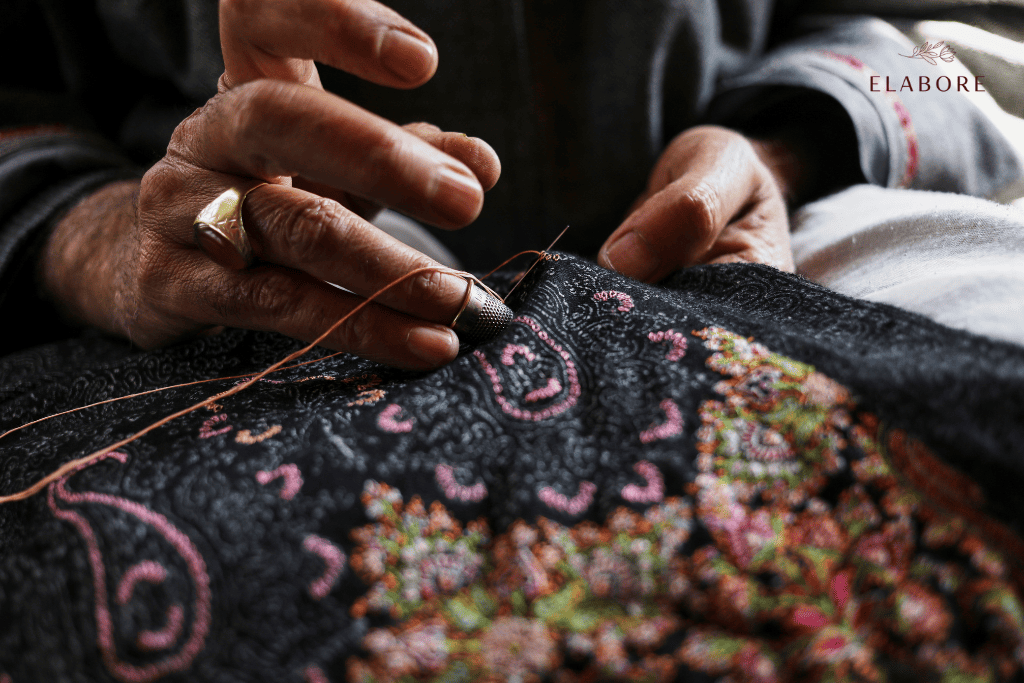
Hand embroidery techniques such as Sozni and Kani, executed with precision and patience.
-
Natural, floral and bird motifs, heritage patterns, and classical Kashmir design inspired by nature have all found their way into the traditional art of pashmina.
-
Delicate borders that frame the shawl elegantly without overpowering the fabric.
-
Balanced design symmetry, which is the result of careful planning and hand execution.
All these features together make a real pashmina shawl and at the same time, they are the rewards of the artisan's mastery.
Why Imitation Shawls Lack Cultural Depth
The shawls that are made in large quantities usually depend on printed or machine-stitched designs that imitate the traditional patterns without getting their full depth or meaning. Such designs may be regarded as ornamental but they do not possess the fine detailing, harmony, and subtle variations that an authentic pashmina shawl offers. A pure pashmina shawl along with real Kashmiri artistry reflects the uniformity in the skill of the artisan while at the same time allowing for minor differences that assert its handmade character. These subtleties cannot be mimicked through factory methods.
Artistry as Proof of Authenticity
Cultural detailing acts as a proof of authenticity, and it is given by two senses, visual and tactile. Artistic elements in the shawl pushed the claim of a being an original pashmina strongly reinforced when coupled with fine fiber, handwoven texture, and lightweight warmth. The acknowledgment of this artistry allows customers to discern a real Kashmiri pashmina shawl confidently and regarding it as a wearable piece of heritage, to appreciate it.
8. Understand Pricing: Real Pashmina Is Never Cheap
Price is among the strongest criteria to consider when distinguishing between a fake and a real pashmina shawl. Even though cheapness is attractive, one must realize that the cost of a genuine pashmina shawl is made up of unavoidable expenses which if reduced, will lead to a product of inauthenticity. An original pashmina always signifies scarcity, craftsmanship, and patience—these are also the reasons for the high prices.
Why Authentic Pashmina Costs More
The original pashmina's exorbitant price tag is supported by the distinct and time-consuming production process.
The price of a pure pashmina shawl is comprised of several factors:
-
Limited raw material, as genuine pashmina fiber is collected only once a year
-
Skilled manual labor, including hand-spinning and hand-weaving by trained artisans
-
Time-intensive weaving, often taking weeks or months for a single shawl.
-
Artisan craftsmanship, passed down through generations, which cannot be imitated by machines
All these factors together make sure that a real pashmina shawl is always a luxury textile and never a mass-produced product.
Why Low Prices Are a Red Flag
In case a shawl is sold at an unusually low price, it is most probably not a genuine pashmina. The high-low pricing generally suggests the mixing of fibers, industrial production, or the use of synthetic materials. Though these substitutes can easily deceive one at the first sight, they will not have the characteristics of a pure pashmina shawl like softness, warmth, durability, and also the historic aspect. It is impossible to create a true original pashmina at a low cost without compromising either quality or authenticity. An exceptionally low price is often a sign of deception.
Value Beyond Price
Obtaining a legitimate pashmina shawl is not merely a transaction—it is an investment in enduring quality, cultural heritage, and elegance that never goes out of style. A true pashmina shawl retains its luster over the years and in some cases becomes even more delicate, thus giving value that far exceeds the price embedded in it. Knowing the prices helps the consumers to take well-informed decisions while being able to tell a real pashmina from a fake with no doubt. It is fair to say that when evaluating a shawl, the real luxury is always pricey— and a pure pashmina shawl stands as a case.
9. Ask About Certification & Authenticity Proof
The seller's reliability is at least as important as the product when recognizing a pure pashmina shawl. The prestigious luxury brands accept the worth of authenticity and are open in every detail of their genuine pashmina shawls. Transparency and clarity are the strongest pointers that you are in contact with a true pashmina source and not with a seller of fakes.
Why Seller Transparency Matters
The story of a pure pashmina shawl goes back to the finest handicraft, and the trustworthy sellers acknowledge this tradition by giving straightforward, verifiable details. A true pashmina is not a product made for the mass market, thus the sellers who offer genuine pieces are well-informed and very sure about their sourcing, production methods, and quality standards. Sellers who are not transparent usually signal that a shawl might not be a genuine pashmina shawl. Those who shy away from inquiries or give ambiguous responses are often hiding something.
What to Ask When Buying a Pure Pashmina Shawl
Prior to the acquisition of a pure pashmina shawl, put direct and specific queries to the seller. An honest dealer in genuine pashmina items will offer without hesitation:
-
Information on the fiber composition which verifies that the content is 100% pure pashmina
-
Confirmation of the handloom process which guarantees the shawl to be hand-spun and hand-woven
-
Information on the artisan sourcing which emphasizes the traditional skills
-
GI or authenticity references which are proofs of the pashmina's originality
All these details are aimed at confirming that the shawl is a real pashmina and not a blended or machine made substitute.
Confidence Is a Sign of Authenticity
A seller who sells through trust will always willingly impart information about their genuine pashmina products. Transparency is a sign of good quality and consideration for the customer. Genuine pashmina shawls dealers know that knowledgeable buyers raise questions that are easy to answer—and they are open to such buyers. By picking a transparent and trustworthy dealer, you will get a pashmina shawl that is pure, ethically harvested, and luxurious. This last action allows the consumers to invest in a real pashmina shawl that provides the quality of elegance and the worth of having it for a long time confidently.
10. Buy from a Trusted Luxury Brand
One of the surest methods to remove doubts about the investment in a pure pashmina shawl is buying from a trusted brand. Luxury brands that are trusted have crafted their names successfully on authenticity, quality, and transparency, thus, making them the safest option for the buyers who want to have a real pashmina shawl. A strong brand image completely reduces the concerns about the authenticity of the product.
Why Brand Trust Matters in Authentic Pashmina
Luxury brands already understanding the value of pashmina as more than just fashion—a symbol of heritage, craft, and ethical responsibility, not only support but also advocate for the compliance with strict standards that every pashmina will meet in terms of being traditional and qualitative before it is delivered to the customer. The leading brands are assuming the responsibility for the products they market by giving the certainty that every single original pashmina is both real and ethically sourced.
How Trusted Brands Ensure Authenticity
The top luxury brands dealing with original pashmina shawls have very strict practices to guard the quality and integrity, such as:
-
Conducting thorough checks on quality at each and every stage of manufacture
-
Getting their supplies in an eco-friendly way, taking into account both the maker and the environment
-
Directly dealing with the talent of the artisans and teaching them the old arts
-
Ensuring that the product is genuine, so that the customer is certain that he has bought a pashmina shawl
Through these actions, the worth and the distinctiveness of a pure pashmina shawl are maintained.
Peace of Mind Comes with Trusted Names
Purchasing a deficit pashmina scarf from a renowned manufacturer gives you total reassurance. The shawl in your possession will be of the highest quality pashmina, made with attention and honesty. You can let go of all the doubts related to the quality and the place of origin and simply relish the elegance, warmth, and ageless beauty of a true pashmina shawl. Going with a reputed brand means that your investment in a pure pashmina shawl is not only protected but also made to be meaningful and luxurious in the real sense.
Buy with Knowledge, Invest in Authentic Luxury
A pashmina shawl of the finest quality is an investment that never goes out of fashion. It provides the highest degree of softness, warmth, and elegance. By mastering the technique of recognizing real pashmina, you will be able to make wise decisions and keep away from fake items. The acquisition of an original pashmina shawl means the procurement of tradition, skill, and luxury that never fades away.