Cart
0
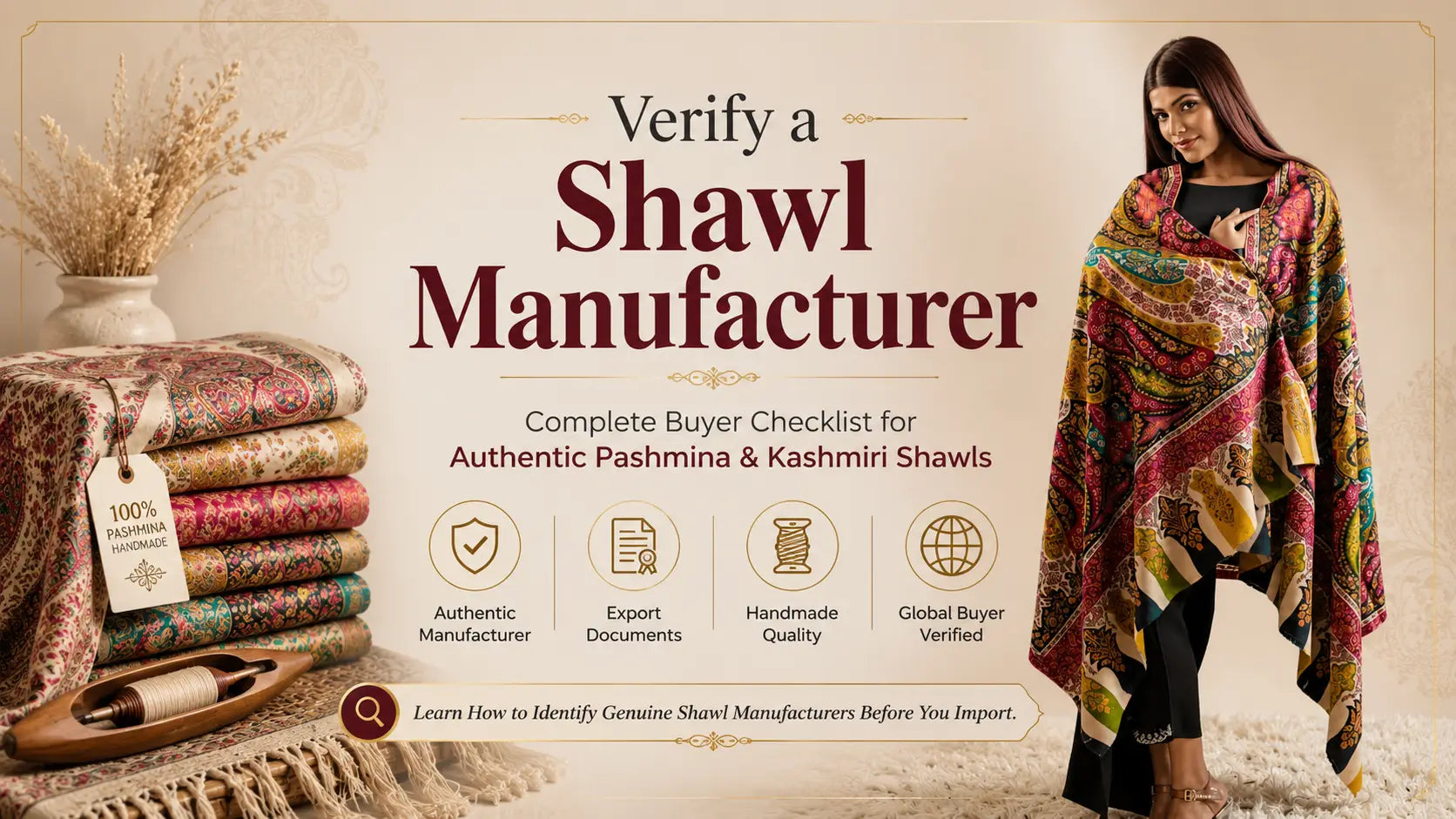
A polished website and a fast WhatsApp reply are not proof that a shawl manufacturer can deliver what they promise. Every year, boutique owners and wholesale buyers send advance payments to suppliers who turn out to be trading companies posing as factories, or worse, do not exist at all once the money clears. Knowing how to verify a shawl manufacturer before you commit to an order is not optional due diligence. It is the difference between a reliable sourcing partner and a shipment that never arrives.
This guide walks through a practical supplier due diligence checklist built specifically for the shawl and pashmina trade, where the line between a genuine manufacturer and a middleman reselling someone else's stock is often blurred on purpose. If you have not yet decided which type of supplier fits your business, our breakdown of shawl manufacturer vs supplier is a useful starting point before you begin vetting anyone.
Why Verification Matters More in the Shawl Trade
The shawl and pashmina industry has a wide spread of players between the loom and the export shipment. Some are genuine manufacturers with their own weaving and finishing units. Others are trading companies that buy from small workshops and resell under their own brand name, often at a markup with no quality control of their own. A smaller number are outright fraudulent, using stolen product photos and fake certifications to collect advance payments and disappear.
None of this means sourcing from India is risky by default. It means the burden of verification sits with the buyer, and a few structured checks can rule out almost every bad actor before you send a single rupee.
Step 1: Confirm They Are a Registered Business
Every legitimate exporter in India operates with a set of standard registrations. Before going further, ask for:
- GST registration number, which you can independently verify on the Indian government's GST portal
- Import Export Code (IEC), issued by the Directorate General of Foreign Trade, required for any business legally exporting from India
- Udyam or MSME registration, if the manufacturer claims small or medium enterprise status
A genuine manufacturer will share these details without hesitation. Reluctance to provide basic registration numbers is one of the clearest early signals in any supplier due diligence checklist.
Step 2: Ask for Factory Evidence, Not Just Product Photos
Product photography tells you nothing about who actually produced the shawl. To verify a shawl manufacturer's real production capability, ask for:
- A live video call walking through the actual production floor
- Photos or footage of looms, finishing stations, and packing areas with visible date stamps
- Details of monthly production capacity and current lead times
A trading company reselling stock will typically avoid a live factory walkthrough or redirect you toward a warehouse instead of a working production unit. A genuine manufacturer has nothing to hide here and is usually proud to show their setup.
Step 3: Request Samples Before Any Bulk Commitment
No serious B2B order should happen without a sample first. When requesting samples:
- Ask for samples that match the exact fabric composition, weight, and finish you intend to order in bulk, not a showcase piece
- Pay for the sample and shipping yourself. Suppliers who insist on sending free samples with no clear next step are sometimes using this as a lead-generation tactic rather than a genuine sales process
- Test the sample for fabric composition claims. A burn test or a lab test through a local textile testing agency can confirm whether a shawl marketed as pashmina is genuine or a viscose blend. Our guide to shawl materials breaks down what to look for in wool, cashmere, and blended fabrics before you commit to bulk quantities
Step 4: Check Trade References and Export History
A factory audit for textile suppliers does not always require an in-person visit, especially for smaller first orders. You can get most of the way there by checking:
- Export shipment history, which is publicly searchable through Indian customs trade data platforms for a given exporter name or IEC
- References from two or three existing international buyers, ideally in different countries so you are not relying on a single relationship
- Reviews or complaints on B2B platforms like Alibaba, IndiaMART, or industry-specific trade forums, keeping in mind that reviews can be manipulated, so weigh patterns over single comments
Step 5: Understand Their Payment Terms
Payment structure alone can tell you a lot. Be cautious of any supplier who insists on:
- 100% advance payment with no willingness to negotiate a partial deposit and balance on shipment or delivery
- Payment only through personal bank accounts or informal transfer services rather than a registered business account
- Pressure to skip a written purchase order or proforma invoice
A standard, trustworthy arrangement in the textile export trade is typically a partial advance, with the balance tied to shipment documents or a pre-shipment inspection report. This protects both sides and is a normal part of how established exporters operate.
Step 6: Use a Third-Party Inspection for First Orders
For a first-time bulk order, a third-party pre-shipment inspection is one of the highest-value steps in the entire process. Independent inspection agencies can verify quantity, quality, and packaging against your purchase order before the shipment leaves India, catching problems while they are still fixable rather than after the goods have cleared customs on the other side.
This single step is often what separates buyers who get burned once and never source from India again, from buyers who build a long-term, reliable supply chain. It pairs well with the checks covered in our quality control checklist for shawl importers, especially if you are also placing a large first order and want to know how MOQ negotiations typically work, which our bulk shawl buying guide covers in detail.
Red Flags That Should Stop You Before You Pay
A few warning signs come up repeatedly with fraudulent or unreliable shawl suppliers:
- Prices significantly below the market rate for genuine pashmina or cashmere, often the first sign of a fabric composition or quality issue
- Reluctance to provide GST or IEC registration details
- No willingness to do a video call or share verifiable factory footage
- Communication only through WhatsApp or personal email with no company domain or registered business address
- Pressure tactics around limited-time pricing or urgency to pay before you have completed basic checks
Working with an Established, Verifiable Supplier
The steps above are not meant to make sourcing from India feel risky. They are meant to shortcut the process of finding out who already does this correctly. A manufacturer with an established export history, transparent registration details, and a track record of international buyers has already done the work of building trust. The due diligence checklist above is exactly what a serious supplier expects a serious buyer to run, and a supplier who welcomes that scrutiny is usually the one worth working with long-term.
If you would rather skip this process entirely, Elabore Luxury's wholesale program comes with verified registrations, transparent production, and an established export history already in place, so every check on this list is answered before you place your first order.
Frequently Asked Questions
How do I verify a shawl manufacturer in India?
Confirm their GST registration, Import Export Code, and business address independently, request a live factory walkthrough, order a paid sample before any bulk commitment, and check their export shipment history through publicly available trade data.
What is the biggest red flag when sourcing shawls from a new supplier?
Reluctance to share registration details or refusal to do a live video call showing the actual production facility. Genuine manufacturers rarely hesitate on either request.
Should I always ask for a factory audit before ordering?
For first-time bulk orders, yes. A factory audit or third-party pre-shipment inspection catches quality and quantity issues before the shipment leaves the country, which is far cheaper to fix than a dispute after the goods arrive.
How can I avoid fake exporters in India?
Verify GST and IEC numbers on official government portals, request paid samples rather than free ones, check trade references from multiple international buyers, and avoid any supplier demanding full advance payment with no willingness to negotiate terms.
What payment terms are normal in the shawl export trade?
A partial advance payment with the balance due against shipping documents or a pre-shipment inspection report is standard among established exporters. Full advance payment with no flexibility is a common pattern among unreliable or fraudulent suppliers.
\{ "@context": "https://schema.org", "@type": "FAQPage", "mainEntity": [ { "@type": "Question", "name": "How do I verify a shawl manufacturer in India?", "acceptedAnswer": { "@type": "Answer", "text": "Confirm their GST registration, Import Export Code, and business address independently, request a live factory walkthrough, order a paid sample before any bulk commitment, and check their export shipment history through publicly available trade data." } }, { "@type": "Question", "name": "What is the biggest red flag when sourcing shawls from a new supplier?", "acceptedAnswer": { "@type": "Answer", "text": "Reluctance to share registration details or refusal to do a live video call showing the actual production facility. Genuine manufacturers rarely hesitate on either request." } }, { "@type": "Question", "name": "Should I always ask for a factory audit before ordering?", "acceptedAnswer": { "@type": "Answer", "text": "For first-time bulk orders, yes. A factory audit or third-party pre-shipment inspection catches quality and quantity issues before the shipment leaves the country, which is far cheaper to fix than a dispute after the goods arrive." } }, { "@type": "Question", "name": "How can I avoid fake exporters in India?", "acceptedAnswer": { "@type": "Answer", "text": "Verify GST and IEC numbers on official government portals, request paid samples rather than free ones, check trade references from multiple international buyers, and avoid any supplier demanding full advance payment with no willingness to negotiate terms." } }, { "@type": "Question", "name": "What payment terms are normal in the shawl export trade?", "acceptedAnswer": { "@type": "Answer", "text": "A partial advance payment with the balance due against shipping documents or a pre-shipment inspection report is standard among established exporters. Full advance payment with no flexibility is a common pattern among unreliable or fraudulent suppliers." } } ] }