Cart
0
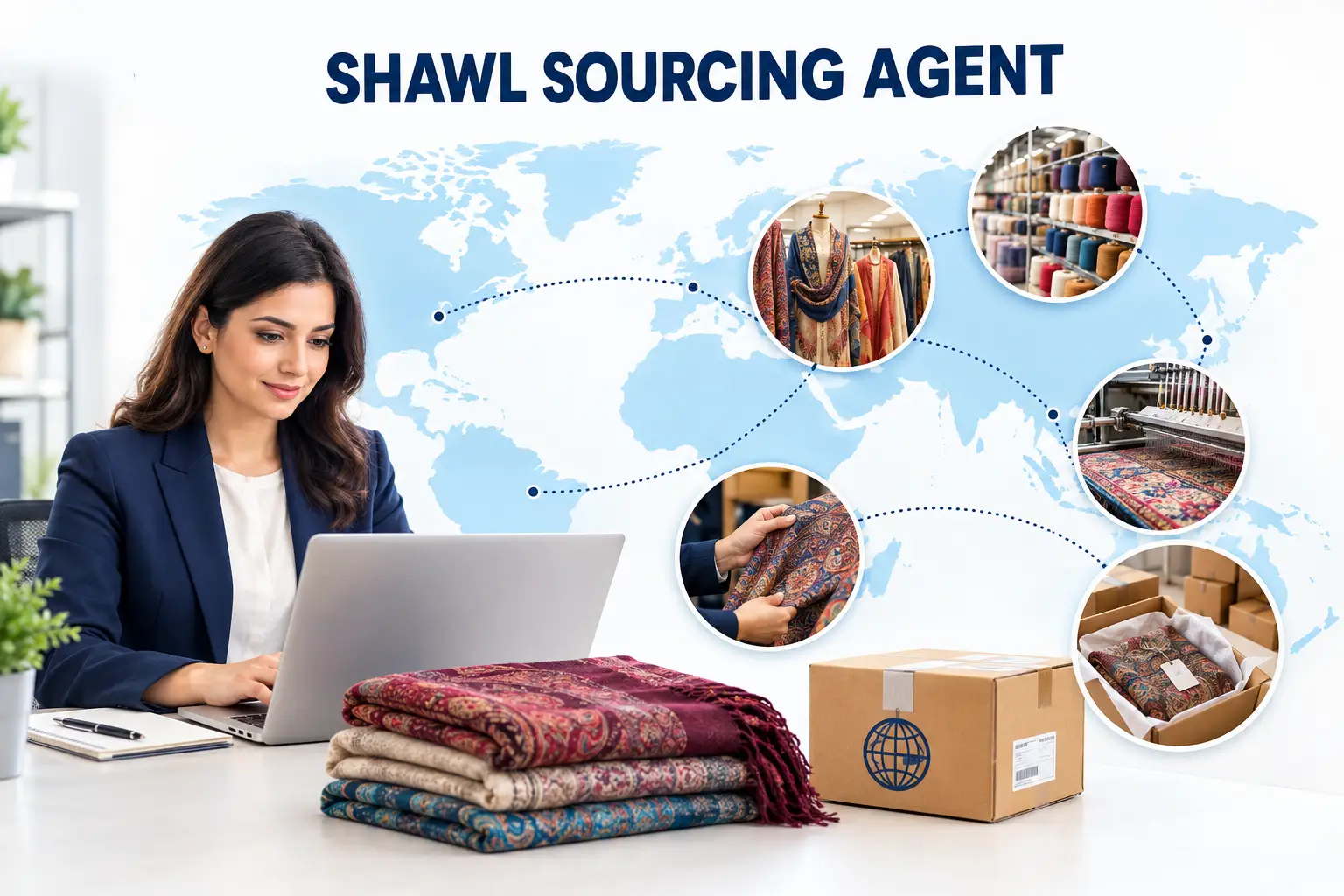
A shawl sourcing agent is a professional intermediary who identifies, vets, and manages relationships with shawl manufacturers on behalf of a retailer or brand — handling everything from factory audits to sample approval, pricing negotiation, and export documentation. For boutique owners, D2C brands, and international importers who don't have a team on the ground in Kashmir or Ludhiana, a sourcing agent removes the guesswork of finding a reliable supplier and replaces it with a managed, accountable process.
If you've ever tried to source pashmina shawls wholesale directly from overseas, you already know the problem: hundreds of "manufacturers" on Alibaba and Indiamart, most of them trading companies posing as factories, inconsistent quality between sample and bulk order, and language or time-zone gaps that turn a simple order into a six-month headache. This is exactly the gap a shawl sourcing agent is built to close.
What Does a Shawl Sourcing Agent Actually Do?
A good textile sourcing agent in India acts as your eyes, ears, and negotiator on the ground. Their responsibilities typically include:
- Supplier discovery and vetting — shortlisting genuine manufacturers instead of resellers, and confirming production capacity, certifications, and past export history.
- Factory audits — physically visiting units to check machinery, working conditions, and whether the "manufacturer" actually manufactures, rather than subcontracting.
- Sample coordination — getting physical samples made, checked for quality, and shipped to you before you commit to a bulk order.
- Price negotiation — using local market knowledge to negotiate fair, at-source pricing instead of the marked-up rates outsiders are often quoted.
- Quality control during production — random inspections mid-production so defects are caught before the entire batch is finished.
- Logistics and export paperwork — coordinating with freight forwarders, customs agents, and export documentation so shipments clear without delays.
In short, a shawl sourcing agent sits between you and the factory floor, absorbing the operational risk that would otherwise be yours.
Why Retailers Use a Sourcing Agent Instead of Going Direct
Buyers often ask why they should pay for a buying agent in Kashmir when they could, in theory, contact a manufacturer directly. The honest answer is that going direct works well only if you already have local relationships, fluent knowledge of the market, and time to travel for audits. Most retailers don't.
1. Verified manufacturers, not middlemen in disguise
This is one of the most common issues we cover in our guide on the difference between a shawl manufacturer and a supplier — many "factories" listed online are actually trading houses that source from the same handful of real units and add a margin at every step. A sourcing agent's job is to trace the supply chain back to the actual producer, which is also the fastest way to protect your shawl business profit margin.
2. Faster, safer bulk ordering
When you're planning bulk shawl buying, the cost of a mistake multiplies with volume. An agent who has already audited the factory and approved the sample reduces the chance of receiving a container of shawls that don't match what you paid for.
3. Local market knowledge on pricing and MOQ
Minimum order quantities and pricing structures vary widely between an actual factory, a trading company, and an independent artisan cooperative. A sourcing agent who works across Indian shawl manufacturers day-to-day knows which type of supplier fits your order size, whether you're placing a trial order of 50 pieces or a recurring order of 5,000.
4. Support with materials and specifications
Not every "pashmina" shawl is made from the same fiber, and getting the material specification wrong at the sourcing stage is expensive to fix later. Agents familiar with shawl materials — pure pashmina, cashmere-wool blends, and machine-loomed wool — help you specify exactly what you're paying for in your purchase order, so there's no ambiguity when the shipment arrives.
5. Smoother compliance and export documentation
International buyers frequently underestimate the paperwork side of importing. A sourcing agent coordinates with export houses to make sure HS codes, certificates of origin, and other documents are in order — which matters even more once duties and customs clearance come into play, a topic we break down in our pashmina shawl import duty guide.
Shawl Sourcing Agent vs. Direct Supplier Contact: A Quick Comparison
| Factor | Working Through a Sourcing Agent | Contacting Suppliers Directly |
|---|---|---|
| Factory verification | Done on-site before you commit | You rely on photos/claims online |
| Sample quality control | Physically checked before shipping | Sent as-is, quality unverified |
| Pricing | Negotiated using local market rates | Often quoted "foreigner pricing" |
| Time investment | Low — agent manages communication | High — language, time zone, follow-ups |
| Risk on bulk orders | Reduced via mid-production checks | Higher — issues found only after delivery |
| Best suited for | First-time importers, growing D2C brands | Buyers with existing local relationships |
How to Choose the Right Shawl Sourcing Agent
Not every sourcing agent operates the same way, so it helps to ask a few direct questions before signing on:
- Can they show verified factory relationships, not just a list of supplier contacts pulled from B2B directories?
- Do they offer physical or video factory audits before you place a bulk order?
- How do they handle quality disputes if a shipment doesn't match the approved sample?
- What's their fee structure — a flat retainer, a percentage commission on order value, or a per-shipment fee?
- Do they understand your specific product, whether that's handcrafted pashmina shawls or private-label production requiring custom branding?
If you're evaluating multiple agents, ask each one to walk you through a recent case — how they sourced a specific order, what issues came up, and how they resolved them. Vague answers here are usually a red flag.
When You Don't Need a Sourcing Agent
To be fair, a sourcing agent isn't the right fit for everyone. If you're placing a small, one-time order, already have an established relationship with a shawl supplier, or are buying finished stock rather than commissioning custom production, you may not need the added layer. Sourcing agents earn their fee on complexity and volume — recurring bulk orders, private label work, or first-time entry into a new sourcing market like Kashmir.
Frequently Asked Questions
What does a shawl sourcing agent charge?
Fees vary, but most sourcing agents charge either a flat monthly retainer, a commission of roughly 3–10% of order value, or a fixed per-shipment fee. Costs typically depend on order complexity, factory audits required, and shipment volume.
Is a sourcing agent the same as a supplier or exporter?
No. A supplier or pashmina exporter sells you the product directly. A sourcing agent works on your behalf to find, vet, and manage that supplier relationship — they represent the buyer's interests, not the factory's.
Can a sourcing agent help with private label or custom branding?
Yes. Sourcing agents commonly coordinate custom labeling, packaging, and branding requirements with manufacturers, which is especially useful for brands building their own private label shawls line.
Do I still need to visit the factory myself?
Not necessarily. Most retailers rely on the agent's on-ground audits and video verification, though a personal visit is worthwhile for very large or ongoing partnerships.
Final Word
Sourcing shawls at scale involves more moving parts than most retailers expect — factory verification, quality control, pricing negotiation, and export compliance all have to work together. A shawl sourcing agent exists to manage that complexity so you can focus on selling rather than chasing suppliers. Whether you're placing your first trial order or scaling into kashmiri shawls wholesale territory, the right sourcing partner is often the difference between a smooth supply chain and a costly one.