Cart
0
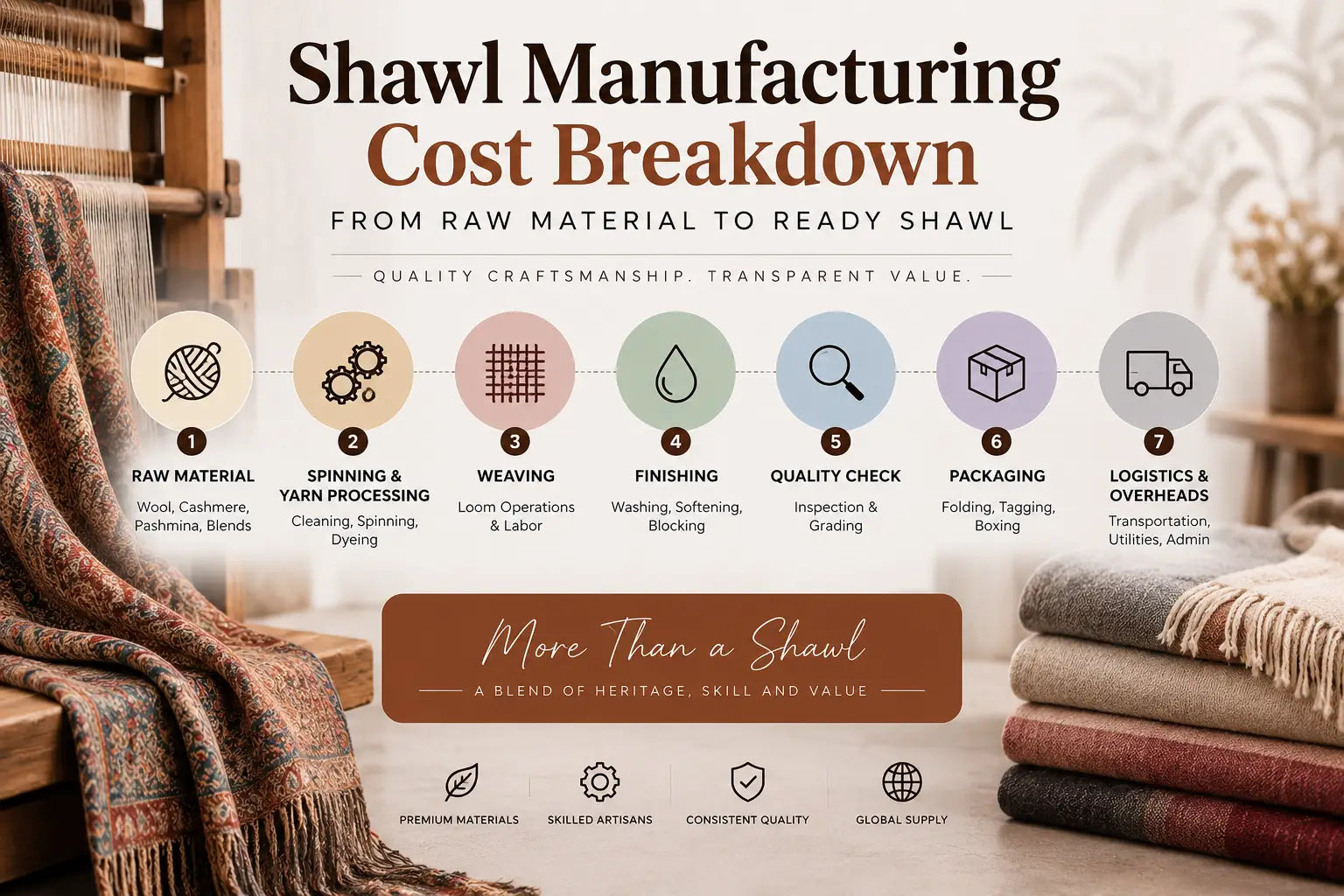
Shawl manufacturing costs break down into five core components — raw material (fiber type and blend ratio), spinning and weaving labor, dyeing and finishing, embellishment such as embroidery, and overhead plus margin at the factory level — with raw material and hand-labor typically accounting for the largest share of cost on genuine pashmina and handcrafted pieces. Understanding this structure is what separates a retailer who can negotiate intelligently with a manufacturer from one who's simply comparing sticker prices with no idea what's actually driving them.
If you've ever received two quotes for what looks like the same shawl, priced 3x apart, the difference almost always traces back to one of these five components — usually fiber blend or the amount of handwork involved, not the manufacturer padding their margin.
The Five Cost Components of a Shawl
1. Raw material (fiber and blend ratio)
This is the single biggest lever on price. Pure pashmina is scarce — a single Changthangi goat yields only a small amount of usable fiber per year — which is why manufacturers commonly blend it with silk, viscose, cashmere, or merino wool at varying ratios to manage cost and supply. As reported by textile trade publications, India-made pashmina shawls are typically sold in three broad bands based on blend percentage: shawls using roughly 20% pashmina blended with viscose or wool sit at the low end; 30–50% pashmina blended with silk, cashmere, or merino makes up the mid-range; and 50–80% pashmina combined with silk or fine cashmere defines the high end. The material specification alone can shift landed cost by several multiples, which is why our guide on shawl materials is worth reviewing before you request quotes.
2. Spinning and weaving labor
Genuine pashmina is hand-spun, almost always by women artisans, and hand-woven by skilled weavers — a process that can take anywhere from several days to multiple weeks depending on complexity. Machine-woven alternatives cut this time dramatically but also change the product category entirely; a machine-loomed wool shawl and a handloom pashmina piece are not comparable on a per-piece cost basis even if they look similar at a glance.
3. Dyeing and finishing
Vegetable and organic dyes, commonly used on higher-end pieces, cost more and take longer than synthetic dyeing but are often specified for premium positioning. Finishing — washing, pressing, edge treatment — adds a smaller but still real cost, particularly on delicate fibers that require careful handling to avoid damage.
4. Embellishment (embroidery, Kani weaving, sequin work)
This is where cost variance gets extreme. Simple machine-embroidered patterns add relatively little to unit cost. Hand embroidery techniques like Sozni needlework, or Kani weaving where the pattern is woven directly into the fabric using small spindles rather than embroidered afterward, can take months per piece and represent by far the largest single cost addition on premium shawls. If you're sourcing handcrafted pashmina shawls with intricate embroidery, this line item — not the base fabric — is usually what's driving your quote.
5. Overhead, compliance, and margin
Factory overhead, quality control, packaging, and the manufacturer's own margin sit on top of the above. This is also where the distinction between buying from an actual manufacturer versus a trading company matters — an extra layer of margin gets added every time a middleman sits between you and production, a distinction we cover in shawl manufacturer vs supplier.
Rough Price Tiers by Blend and Craftsmanship
| Tier | Typical Composition | Construction | Indicative Price Range (Retail, India) |
|---|---|---|---|
| Entry | ~20% pashmina, blended with viscose/wool | Machine-woven, plain or machine-embroidered | Lower end of market |
| Mid-range | 30–50% pashmina blended with silk, cashmere, or merino | Mix of handmade and machine production, embroidered patterns | ₹8,000 – ₹15,000 |
| High-end | 50–80% pashmina with silk or fine cashmere | Handwoven, jamawar or twill construction | ₹15,000 – ₹30,000 |
| Premium/heirloom | High-percentage pashmina, heavy hand embroidery (Sozni, Kani) | Fully handcrafted, months of work per piece | ₹30,000+ |
These figures are indicative retail ranges reported by industry sources and shift with fiber costs and seasonal demand — always confirm current pricing directly with your supplier rather than treating any published range as fixed. For B2B wholesale quotes, expect meaningful discounts off retail-equivalent pricing depending on order volume, which ties directly into how shawl business profit margins actually work once you factor in your own markup.
Why Two "Pashmina Shawl" Quotes Can Differ by 3x
This is the most common confusion retailers run into. A shawl labeled simply "pashmina shawl" without a specified blend percentage tells you almost nothing about cost. Ask suppliers to specify:
- Exact fiber composition (e.g., "70% pashmina, 30% silk" rather than just "pashmina")
- Hand-woven vs. machine-woven construction
- Type of embellishment, if any, and whether it's hand or machine done
- Dye type — vegetable/organic vs. synthetic
A quote that seems unusually cheap for "pure pashmina" is one of the clearest signals of blending or adulteration — a risk we cover in more depth in our pashmina raw material suppliers guide, since genuine high-percentage pashmina simply cannot be priced at mass-market wool-shawl levels.
How This Affects Your Sourcing Strategy
Once you understand the cost structure, a few sourcing decisions become clearer:
- Match blend and craftsmanship to your price point. A retailer targeting a ₹5,000–₹10,000 shelf price should be sourcing mid-blend, partially machine-assisted pieces — not chasing unrealistic "pure pashmina, handwoven" claims at that price.
- Negotiate on volume, not fiber content. Trying to negotiate down the price of genuinely high-pashmina, hand-embroidered pieces rarely works, since raw material and labor costs are largely fixed. Bulk order volume is where you have real negotiating leverage.
- Understand what you're paying extra for with private label or OEM work. Custom branding, packaging, and small-batch runs through an OEM manufacturer add cost on top of the base manufacturing structure — budget for that separately rather than expecting private label pricing to match generic stock pricing.
Frequently Asked Questions
What makes a pashmina shawl expensive?
The combination of scarce raw material (each goat yields only a small amount of fiber annually), labor-intensive hand-spinning and hand-weaving, and time-consuming embellishment techniques like Sozni embroidery or Kani weaving, which can take weeks to months per piece.
Why do two shawls that look similar have very different prices?
Almost always it comes down to fiber blend percentage, whether the piece is handwoven or machine-made, and the type of embroidery or embellishment used — not just brand markup.
Is a cheap "100% pashmina" shawl ever genuine?
It's unlikely. Because genuine pashm is scarce and labor-intensive to process, unusually low pricing on a claimed high-pashmina-content piece is one of the most common signs of blending with cheaper fibers like viscose or merino.
How much does embroidery add to shawl manufacturing cost?
Significantly, especially for hand techniques. Machine embroidery adds a modest amount to unit cost, while hand embroidery like Sozni work or Kani weaving — which can take months per piece — often represents the largest single cost component on premium shawls.
Final Word
Understanding the actual cost structure behind a shawl — raw material, labor, dyeing, embellishment, and overhead — turns supplier negotiations from guesswork into an informed conversation. The next time a quote seems out of line, you'll know exactly which line item to ask about, whether that's fiber blend, weaving method, or the hours of handwork behind the embroidery.