Cart
0
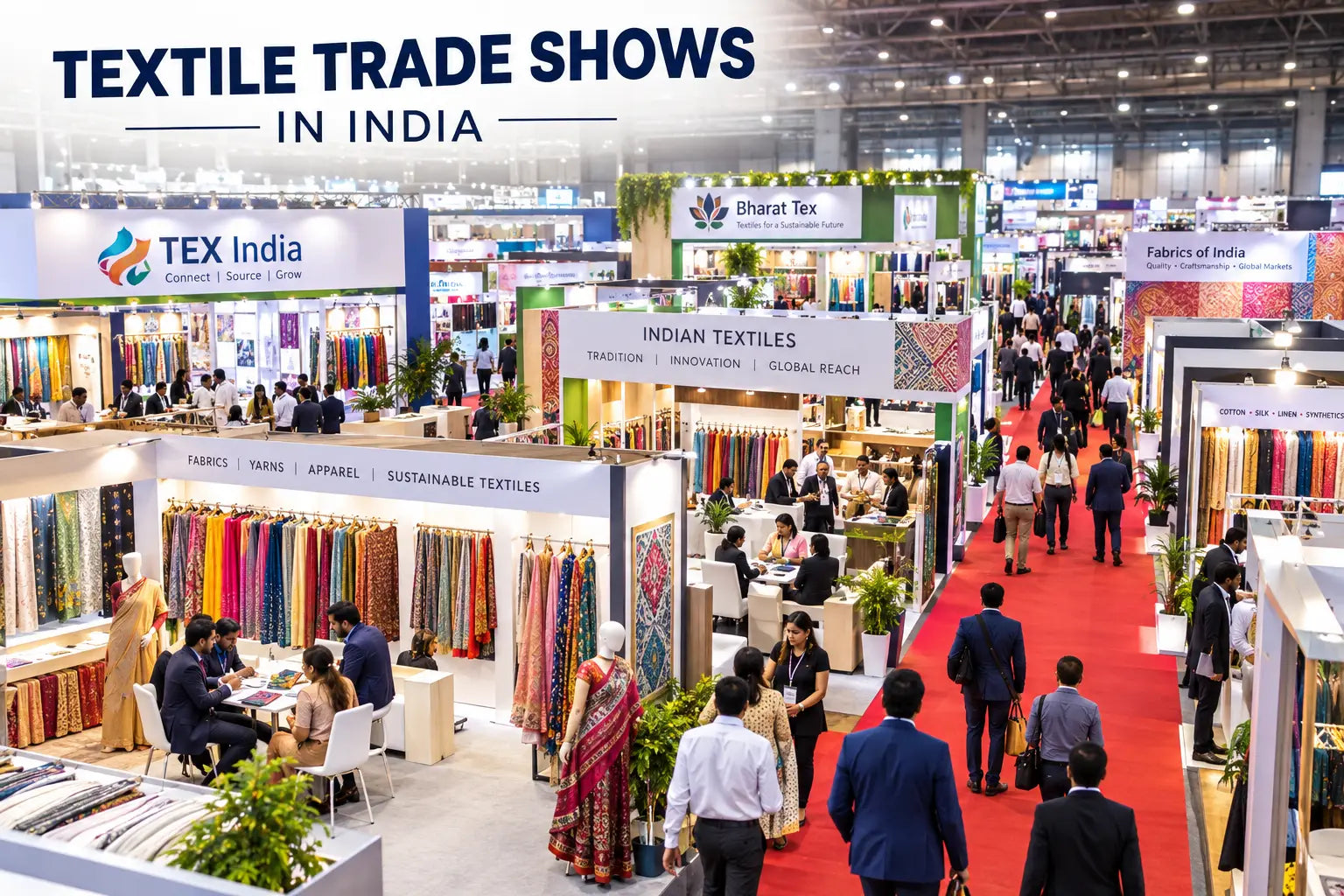
The most important textile trade shows in India for shawl and pashmina buyers are Bharat Tex (New Delhi), the IHGF Delhi Fair (Greater Noida), and the government-organized handicraft exhibitions run by the Directorate of Handicrafts and Handlooms, Kashmir, at venues like Kashmir Haat, Boulevard Srinagar, and Jammu Haat. Attending these events in person is one of the fastest ways for retailers and importers to meet verified manufacturers face-to-face, compare quality across dozens of stalls in a single visit, and build the kind of direct relationship that online sourcing platforms can't replicate.
If you've been sourcing shawls purely through B2B directories and cold outreach, a trade show changes the equation. You can touch the fabric, watch artisans work, and ask questions on the spot — which is exactly why serious buyers still build their calendars around these events every year.
Why B2B Textile Fairs Matter for Shawl Sourcing
Apparel exhibitions India-wide serve a very specific purpose that online sourcing can't fully replace: they compress weeks of supplier vetting into a few days. Instead of exchanging emails with a dozen manufacturers and waiting on samples to ship internationally, you can walk a hall, examine actual pashmina, cashmere, and wool shawls side by side, and shortlist your suppliers within hours. This matters especially for buyers who are still learning to tell the difference between a genuine Indian shawl manufacturer and a trading company reselling someone else's stock — a distinction we cover in detail in our guide on shawl manufacturer vs supplier.
Trade shows also give you leverage. When a manufacturer knows you're comparing them against ten other stalls in the same hall, pricing conversations tend to get more realistic — useful groundwork before you move into bulk shawl buying negotiations later.
1. Bharat Tex — India's Largest Textile Trade Show
Bharat Tex is India's flagship global textile event, covering the entire textile value chain from fiber and yarn to fabric, apparel, and home textiles. The 2026 edition was held from July 14–17 at Bharat Mandapam, Pragati Maidan, New Delhi, organized by the Bharat Tex Trade Federation in association with India's Ministry of Textiles. The event brought together more than 7,000 buyers and over 1,600 exhibitors, with delegates from more than 20 countries. It was designed to facilitate over 4,000 B2B meetings and more than 30 memorandums of understanding covering trade, investment, and market access. 3rd Edition of India s largest global textile Show lBharat Text 2026 scheduled from 14th n 17th July 2026 at Bharat Mandapam New Delhi India +2
For shawl and textile buyers, Bharat Tex is less about walking up to a stall and placing a trial order, and more about scouting the broader landscape — meeting export promotion councils, understanding sustainability certifications, and identifying which regional clusters (Kashmir, Punjab, Himachal) are worth a dedicated sourcing trip. It's a natural complement to research you'd otherwise do through a shawl export business guide or a pashmina exporters directory.
2. IHGF Delhi Fair — The Handicraft and Home Sourcing Hub
The IHGF Delhi Fair is a major B2B sourcing event focused on handicrafts, home, and lifestyle products, held in Greater Noida, Delhi NCR. Organized twice yearly by the Export Promotion Council for Handicrafts (EPCH), it connects over 3,000 Indian manufacturers with international importers and wholesalers across more than 16 product categories. The February edition typically runs in mid-February.
This fair is particularly relevant if you're evaluating private label shawls or OEM production, since many exhibitors here are set up specifically for export orders and custom branding rather than retail-only sales. It's also a good place to compare shawl materials against other handcrafted textile categories, which ties directly into the sourcing questions we cover in our shawl materials guide.
3. Kashmir's Government-Organized Handicraft Exhibitions
Unlike Bharat Tex or IHGF, Kashmir doesn't run a single fixed annual "Kashmir Handicraft Expo." Instead, the Directorate of Handicrafts and Handlooms, Kashmir, along with the Development Commissioner (Handicrafts/Handlooms) under the Ministry of Textiles, organizes a rolling calendar of exhibition-cum-sale events throughout the year at venues including Kashmir Haat, Boulevard Srinagar, Gulmarg, Pahalgam, and Jammu Haat. One recent example is the Hathkargha Mela at Kashmir Haat, organized by the Department of Handicrafts and Handloom Kashmir and sponsored by the Development Commissioner Handlooms, Ministry of Textiles. Similar events, such as the Gandhi Shilp Bazar Exhibition-cum-Sale at Jammu Haat, bring in dozens of master artisans from across India showcasing handloom and handicraft textiles directly to buyers.
These government-run melas are explicitly positioned to give artisans and cooperative societies a direct marketing platform to sell to buyers, cutting out layers of middlemen. For a B2B buyer, that's the real appeal: you're often talking to the artisan or cooperative directly rather than an agent three steps removed from production — the same principle we explore in our piece on kashmiri shawls wholesale.
There's also movement toward a more permanent international sourcing venue in the region. Industry discussions between the Kashmir Chamber of Commerce and Industry and the Ministry of Textiles have floated plans for an international exposition in Srinagar and a permanent facility that would host year-round craft exhibitions and buyer-seller meetings. The stated goal is to significantly grow Kashmir's handicraft exports over the next few years, with increased participation in national and international trade shows seen as central to that plan. Buyers planning a Kashmir sourcing trip should check current dates directly with the Directorate of Handicrafts and Handlooms Kashmir or the Development Commissioner (Handicrafts) office, since exhibition schedules shift seasonally.
Quick Comparison: Which Show Fits Your Sourcing Goal
| Trade Show | Best For | Scale | Typical Timing |
|---|---|---|---|
| Bharat Tex | Broad industry scouting, sustainability trends, policy/export connections | Very large (1,600+ exhibitors) | July |
| IHGF Delhi Fair | Handicraft & home textile sourcing, private label, OEM | Large (3,000+ manufacturers) | February & autumn editions |
| Kashmir craft melas (Kashmir Haat, Boulevard, Jammu Haat) | Direct artisan/cooperative contact for pashmina and Kani shawls | Smaller, regional | Rolling through the year |
How to Get the Most Out of a Textile Trade Show Visit
- Go in with a shortlist, not a blank slate. Research manufacturers beforehand using B2B directories and existing relationships so the show is for verification, not first contact.
- Bring a fabric checklist. Know how to distinguish real pashmina from wool blends before you're standing at a stall — our shawl materials guide is a useful reference to keep handy.
- Ask about MOQs on the spot. Minimum order quantities differ sharply between artisan cooperatives, factories, and trading houses.
- Document everything. Photos of samples, business cards, and notes on pricing conversations are easy to lose track of after a multi-day event with dozens of stalls.
- Follow up within a week. The relationship-building value of a trade show evaporates quickly if you don't follow up while the conversation is still fresh.
Frequently Asked Questions
Which is the biggest textile trade show in India?
Bharat Tex is India's largest global textile event, covering the full value chain from raw fiber to finished apparel, with thousands of exhibitors and international buyer delegations.
Is there a dedicated pashmina or Kashmir handicraft trade fair?
There isn't one single fixed annual expo. Instead, Kashmir's Directorate of Handicrafts and Handlooms runs a rolling calendar of exhibition-cum-sale events across venues like Kashmir Haat, Boulevard Srinagar, and Jammu Haat throughout the year, alongside occasional larger international expositions discussed with trade bodies.
Can international buyers attend Indian textile trade shows?
Yes. Events like Bharat Tex and IHGF Delhi Fair actively invite international buyer delegations and hold structured B2B meeting programs specifically for overseas importers and wholesalers.
Do I still need a sourcing agent if I attend these shows?
Often, yes. A trade show is excellent for discovery and first contact, but ongoing quality control, factory audits, and order management are usually easier with a sourcing agent on the ground — something we cover in our guide to working with a shawl sourcing agent.
Final Word
Textile trade shows remain one of the most efficient ways to build a reliable shawl supply chain — you get to see quality firsthand, meet manufacturers without a middleman, and benchmark pricing across the market in a single trip. Whether you start broad at Bharat Tex or go directly to Kashmir's artisan-run exhibitions, the goal is the same: fewer sourcing surprises once you move into serious bulk shawl buying.